Not long before she walked onto Mark Seliger’s set and removed every item of clothing she had on, Kim Kardashian sat down for an interview and said, with complete sincerity: “When I was little I always thought I was going to be a housewife.”
She described the vision in detail: gym every morning, breakfast for the kids, packing lunches, school runs. In that same interview we get a glimpse of exactly what she was wearing that day, before the shoot that would leave her wearing nothing at all.
The gap between that self-portrait and what W Magazine published in November 2010 is, to put it mildly, considerable. When the Art Issue hit newsstands, the collective reaction was a double-take, a slow page turn, and a quiet reassessment of what a mainstream fashion magazine was apparently allowed to do. The answer turned out to be: quite a lot.
The stylist’s very long break
A wardrobe stylist on a shoot like this occupies a strange professional position. There is a rack somewhere on the perimeter. Garment bags. Steamers. An iron nobody will use. The brief for this particular shoot made every single piece of it redundant from the first frame to the last: Kardashian was to be nude throughout. Completely, unambiguously nude. No clothing, no accessories, no jewelry. The stylist’s entire professional toolkit was, for the duration of the shoot, decorative. Whatever Seliger shot on that set, published or not, the wardrobe department had no hand in any of it.
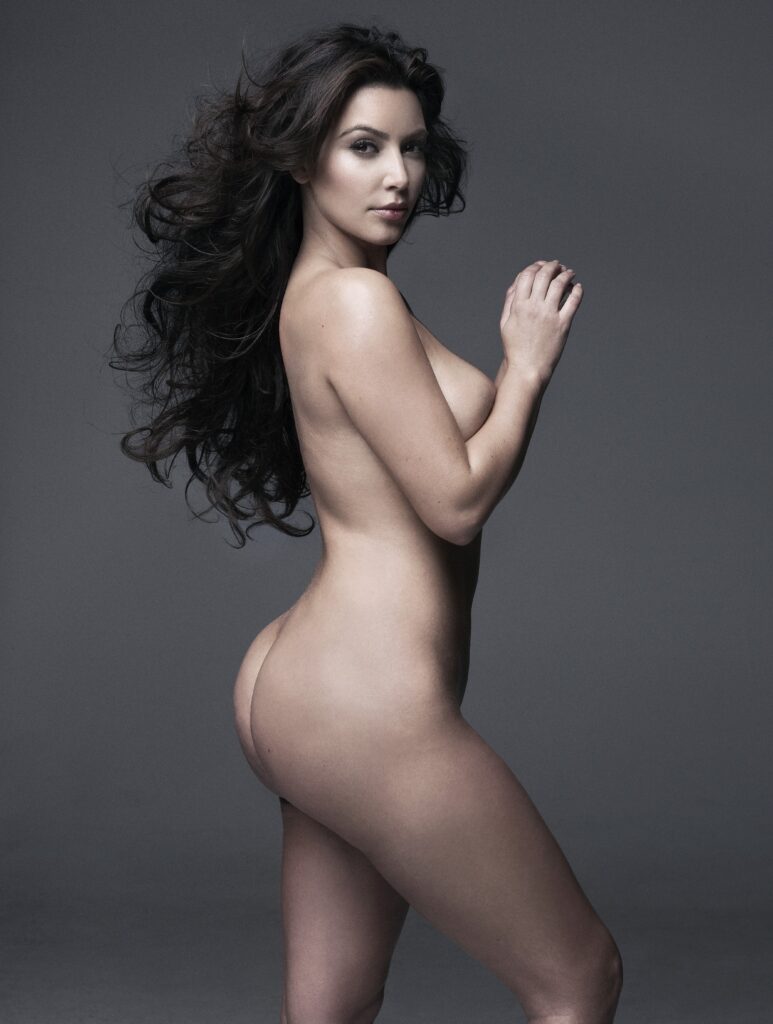
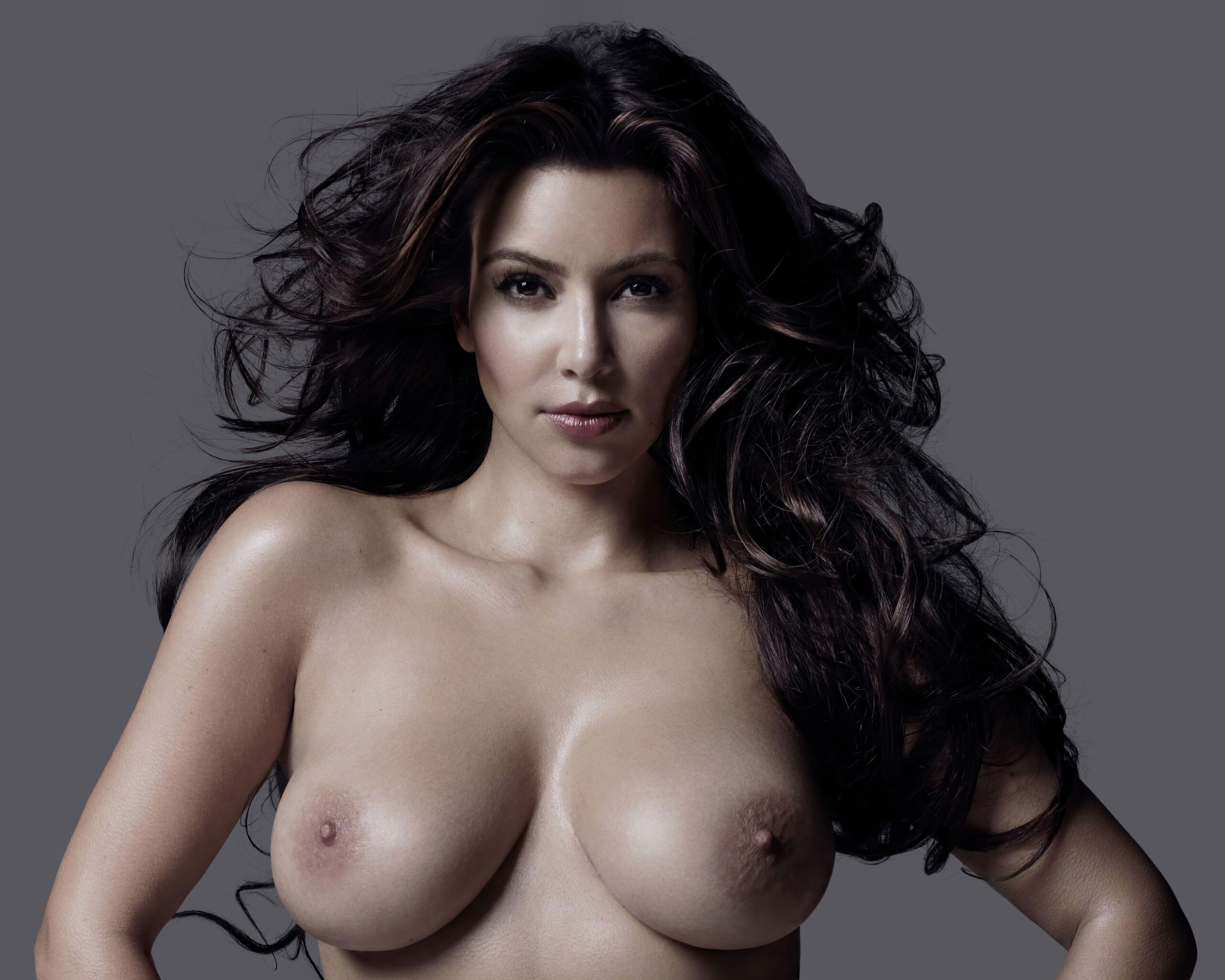
What made this functionally possible, and what made it a statement rather than merely a stunt, is that Kardashian is by any reasonable measure the celebrity most comfortable in her own skin in the history of the form. Her voluptuous, curvaceous figure has never been something she has hidden, minimized, or apologized for. Where other celebrities negotiate with cameras, Kardashian simply occupies the frame. She walked onto Seliger’s set nude, and the photographs look exactly like that: a woman entirely at ease with her body being the only thing in the room worth photographing.
The cover nobody expected
The cover is nude from top to bottom. Seliger photographed Kardashian in bare skin, no paint, no fabric, no accessories, with artist Barbara Kruger‘s red-and-white text banners as the only element standing between the image and the kind of classification that keeps magazines behind plastic at the checkout. The nudity is total. The Kruger text, reading “It’s all about me / I mean you / I mean me,” is doing serious structural work. What Seliger captured in that session extended well beyond what editorial constraints allowed onto the cover, and the outtakes from that portion of the shoot are a testament to how far the brief actually went.
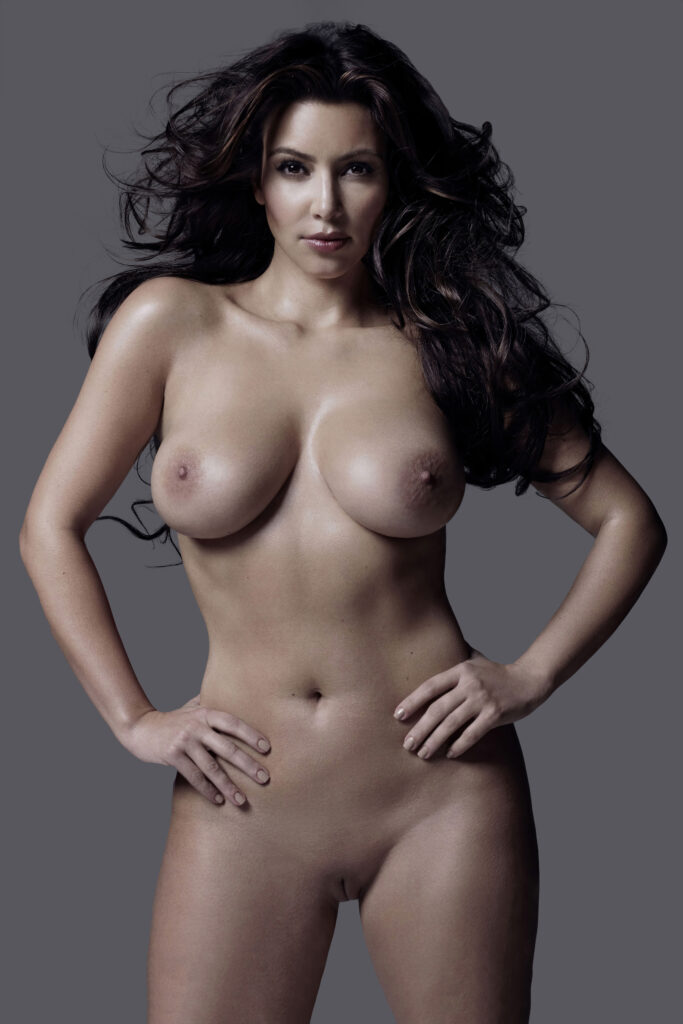
The first response from most people who picked it up was a variant of: they actually published this. The second, once the initial surprise settled, was to notice how formally precise the image is. Seliger lit the nude figure without flattery or softness, the lighting clinical, almost documentary, which gave it the quality of a serious portrait rather than a celebrity spread. At the time it mostly just registered as very naked. Which, again, it is.
Eight pages of nothing
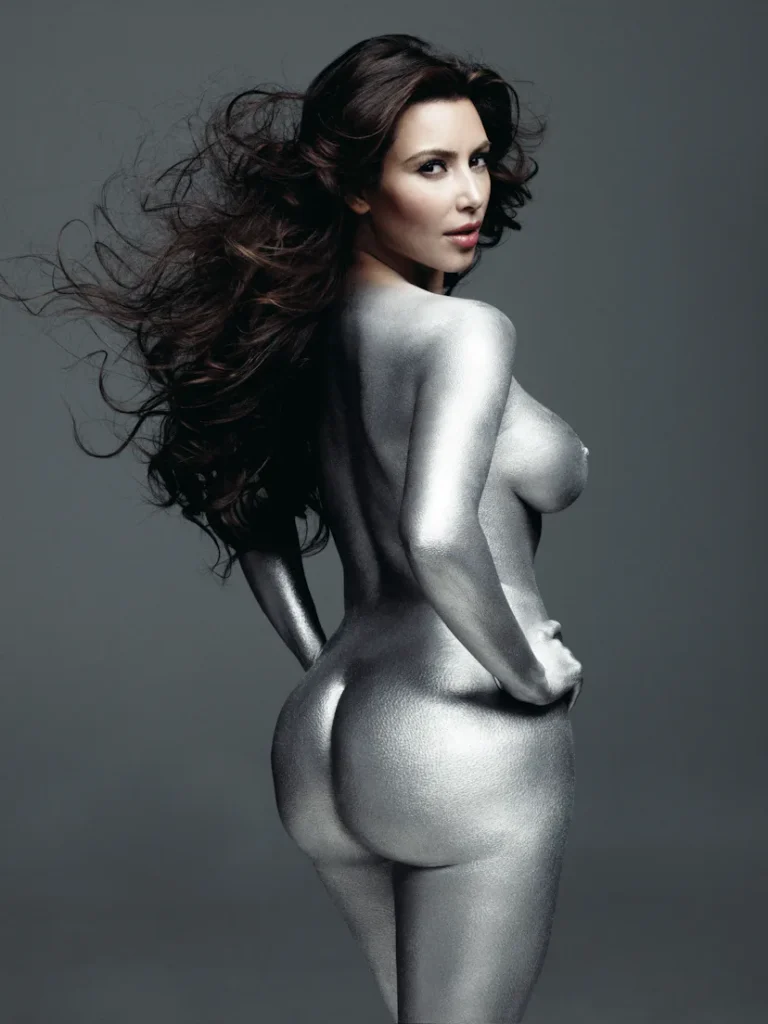
Inside the magazine the shoot opens up further. Makeup artist Gucci Westman engineered a liquid metallic silver paint applied across Kardashian’s entire nude body for the editorial’s centrepiece sequence.
The paint resolved every anatomical contour of her curvaceous figure without obscuring any of them, producing something that photographed less like body paint and more like a classical nude cast in silver. It conceals nothing. It simply changes the surface. Seliger shot extensively around this setup, and the frames that did not make the final cut are no less complete in their nudity than those that did.
Several further frames in the published editorial dispense with paint entirely: nude against the set, composed using shadow and pose as Seliger’s only tools. These are the images that made people set the magazine down for a moment. They are nude in the most direct, uncomplicated sense. Kardashian’s full figure, bare skin, Seliger’s lens, and nothing else in between.
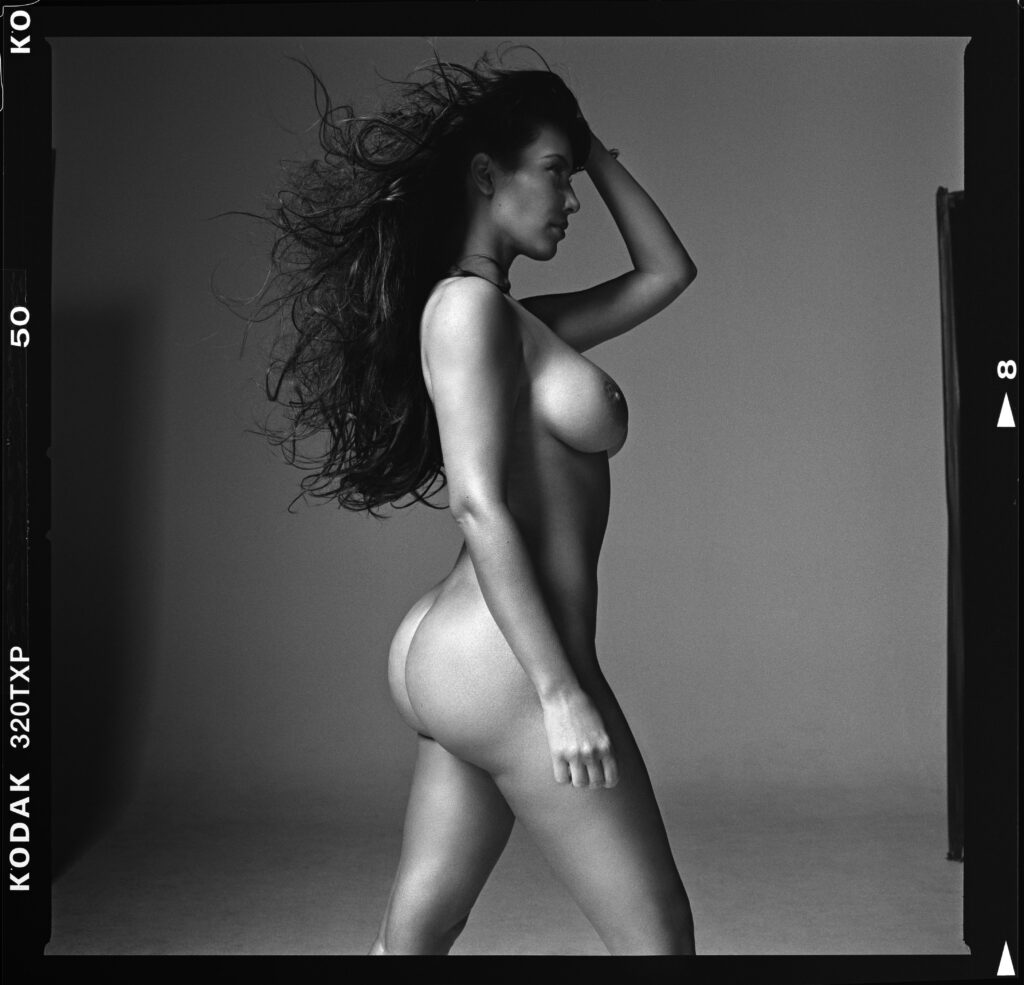
The outtakes from these sequences represent the shoot at its most unmediated, Seliger working with nothing but the subject herself and whatever the light was doing.
What it meant then, what it means now
In 2010, the cultural conversation around Kardashian was still shaped by the sex tape that preceded her celebrity. The W shoot was immediately read through that lens by half the commentariat, which was the least interesting reading available. The more accurate one is that Seliger handed Kardashian a context in which her nude body became the raw material for a formal art statement, and she took it without hesitation. That lack of hesitation is, looking back, the most remarkable thing about the shoot. She was the most comfortable person on that set.
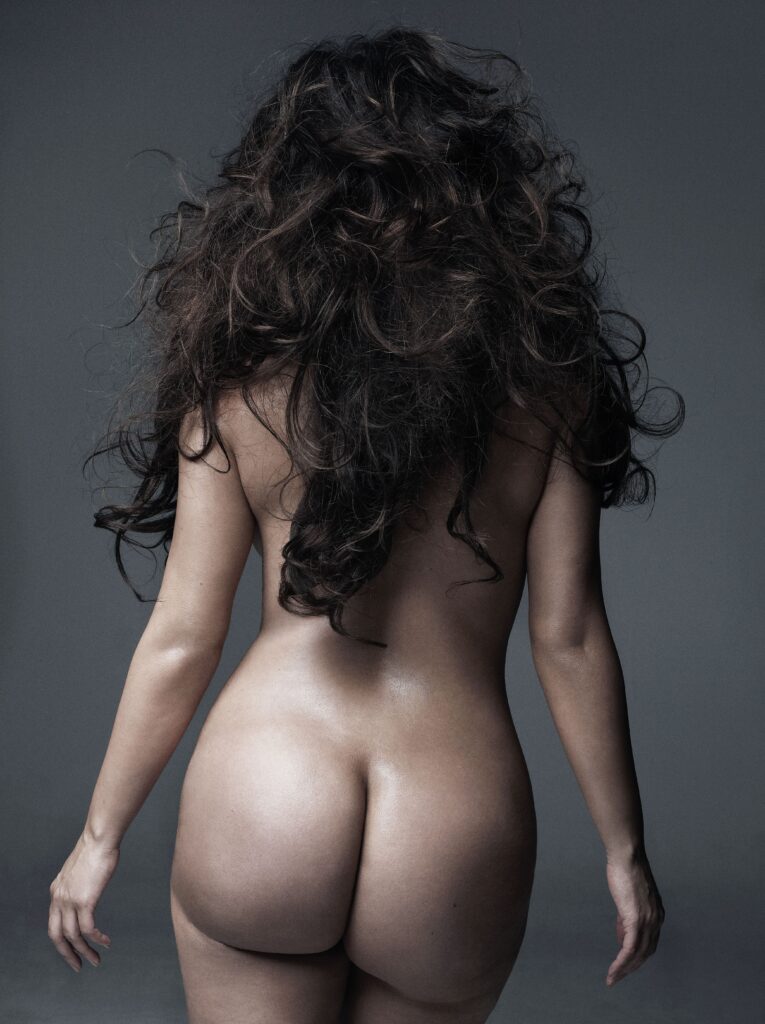
Kim cried when she first saw the images in print. She later called it one of her favourite covers. Both reactions make complete sense. It is a confronting set of photographs, and also one of the most compositionally serious nude editorials a major American fashion magazine has published in the past two decades.
Not bad for someone who once pictured herself packing school lunches. The stylist, for her part, came back inside to a rack of clothes nobody had touched. There was nothing left for her to do, and the shoot was better for it.