When Love & Other Drugs was released in November 2010, most of the press attention went exactly where the film’s publicists probably feared: straight to Anne Hathaway’s body. The nudity was extensive, the sex scenes were numerous, and the media treated both as the story. Hathaway pushed back. “I saw the film the other night,” she told MTV News, “and when I saw it, I’m like, ‘Why is everyone going on about this?’ It’s really such a small part of the film.” Gyllenhaal offered the more useful reframe: “Us taking off our clothes in the movie is the result of us knowing that we cared about the story and the story is important to us.”
He was right, and the distinction matters. The nudity in Love & Other Drugs is not incidental, decorative, or a commercial calculation. It is the primary language through which the film’s central argument is made. Strip those scenes out and you do not just lose the heat. You lose the plot.
What the film is actually about
Directed by Edward Zwick and based on Jamie Reidy’s book Hard Sell: The Evolution of a Viagra Salesman, the film is set in 1996 Pittsburgh. Jamie Randall (Gyllenhaal) is a pharmaceutical salesman working for Pfizer, charming and commitment-allergic, who meets Maggie Murdock (Hathaway) while shadowing a prominent physician. Maggie is 26, a free-spirited artist, and living with early-onset Parkinson’s disease. She has built her entire emotional life around not needing anyone, because needing people when your body is already betraying you is a risk she has calculated as too expensive.
That is the real story. The pharmaceutical industry satire running alongside it, the Viagra launch subplot, the comic relief from Josh Gad as Jamie’s brother — all of it is backdrop. The film lives or dies on one question: can a woman who has decided to need no one allow herself to be loved anyway. Every sex scene is a chapter in that question’s answer.
How Hathaway approached the nudity
Hathaway’s preparation for the role was serious and deliberate. She spent time with Lucy Roucis, an actress living with Parkinson’s disease who also appears in the film, to understand the physical reality of the condition. For the nude scenes specifically, she studied the work of Kate Winslet and Penélope Cruz, two actresses she felt had, in her words, “done nudity with a tremendous amount of sensitivity and dignity.” She and Gyllenhaal discussed every scene in advance, established shared references, and negotiated their individual comfort levels before filming began. Hathaway had final cut over her nude scenes and used it, trimming around five seconds where she felt the camera lingered unnecessarily.
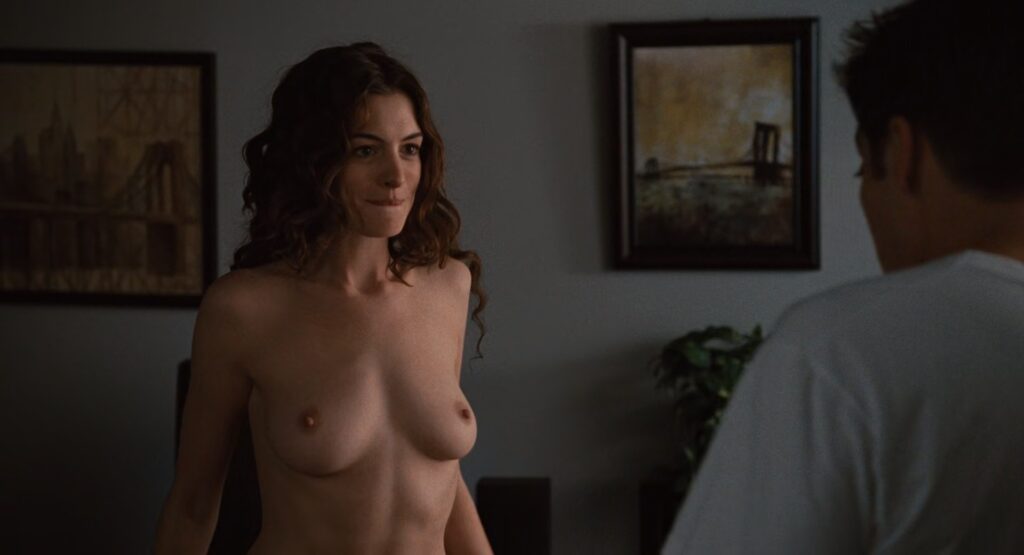
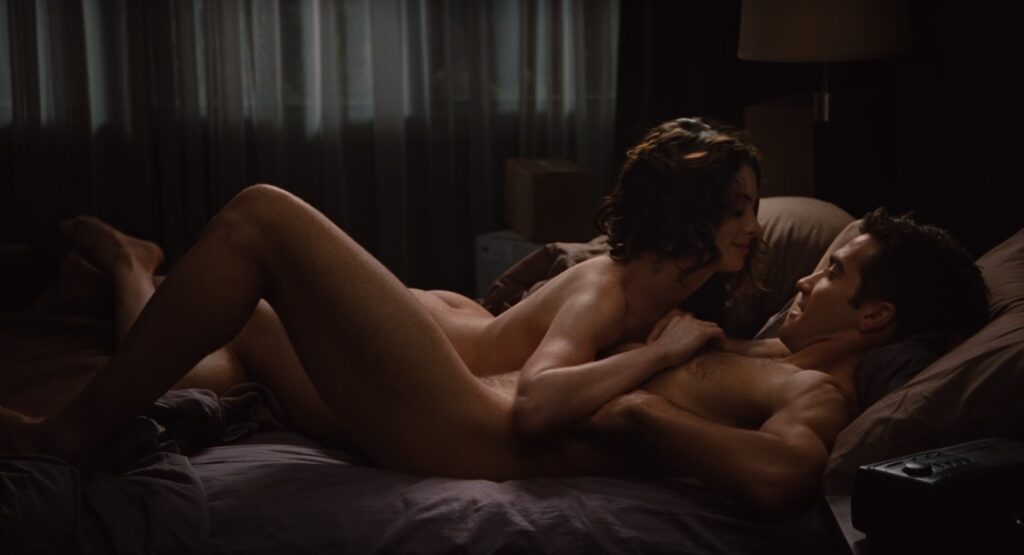
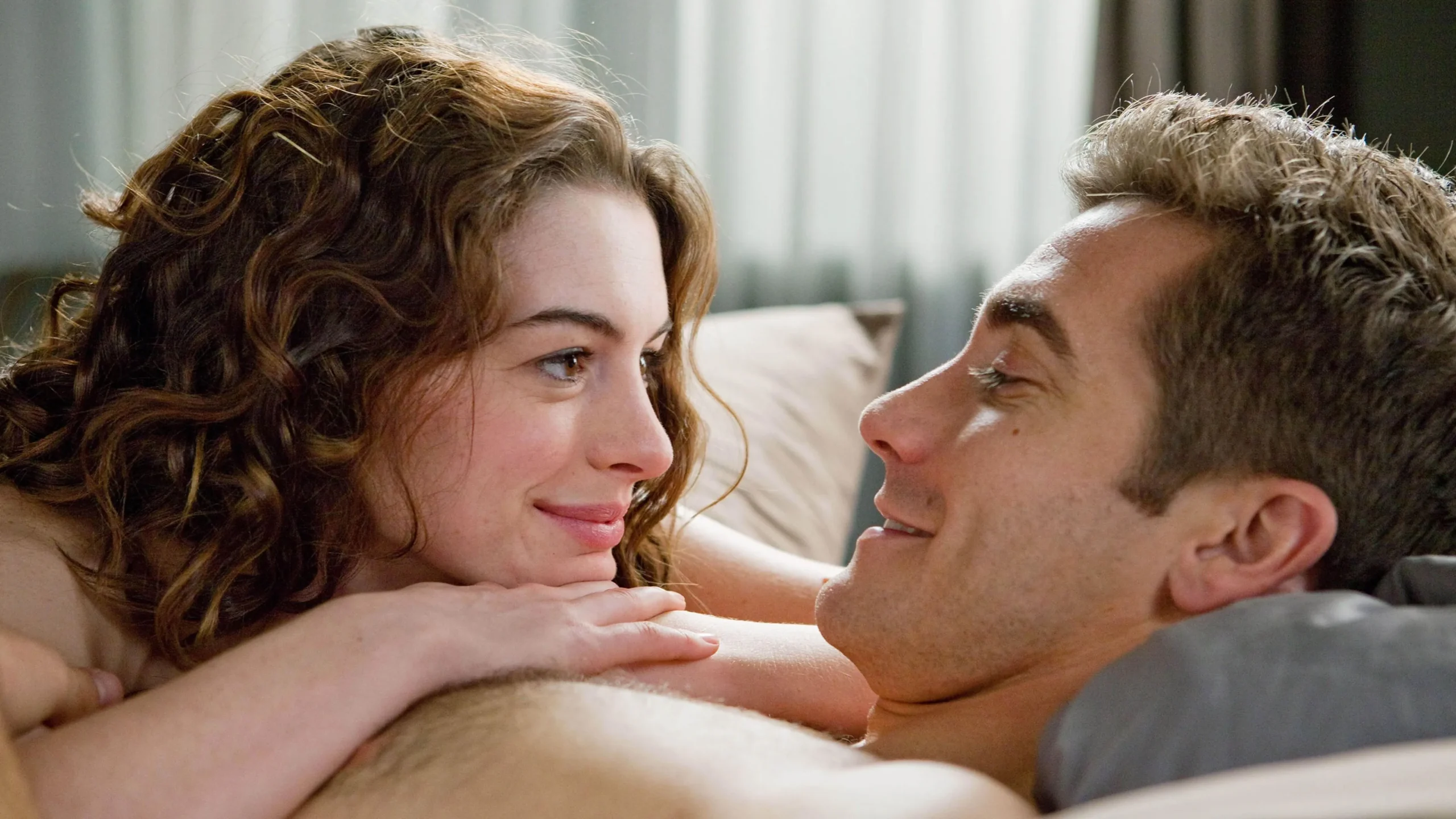
On set, the reality was less glamorous. She told Entertainment Weekly that she had planned to stay in control by disrobing at the last minute and redressing between shots, but found that putting her robe back on kept rubbing off her body makeup, adding twenty minutes to filming each time. Eventually she simply stayed naked. Director Zwick, according to IMDB’s production trivia, at one point got into bed naked alongside both actors during filming to help them feel more comfortable — a photograph from that moment, with Zwick later digitally removed, became the film’s poster.
“We didn’t want to lose the film’s energy in these scenes. It’s less of nudity and more of intimacy.”
Anne Hathaway, Reuters interview, 2010
What the sex scenes are doing
The critical reception was divided precisely at this point. Deep Focus Review noted that Gyllenhaal and Hathaway “bare all and seem completely comfortable in their scenes together talking and making love, presenting a rare, truthful portrayal of romantically involved lovers.” Some IMDB reviewers found the opposite: that Hathaway was shown topless so frequently it felt less like emotional honesty and more like a directorial decision that had crossed into something predatory.
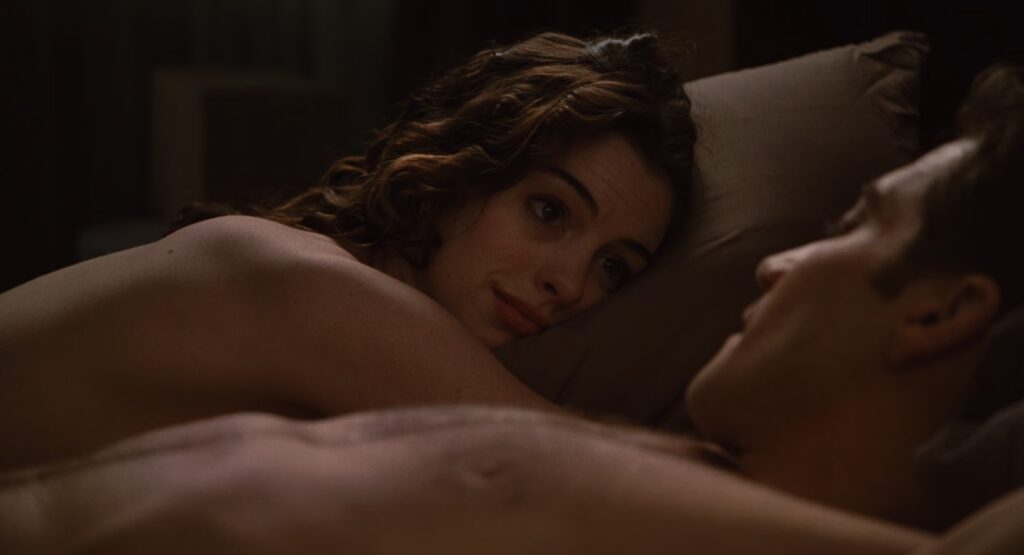
Both responses are legitimate, and the tension between them is actually the most interesting thing about the film. What Zwick was attempting, and what Hathaway and Gyllenhaal largely deliver, is a portrayal of two people for whom sex comes easily and emotional intimacy does not. Maggie in particular uses physical openness as a substitute for the emotional kind. She is naked with Jamie almost immediately. She is genuinely vulnerable with him much later, and much more reluctantly. The sex scenes early in the film and the sex scenes in the third act look similar on the surface. What they mean is completely different, because what Maggie is willing to give Jamie has shifted underneath them.
“All that overt sexuality is just not me. I was playing a character way out of my comfort zone.”
Anne Hathaway, Reuters interview, 2010
That is the case for these scenes serving the story rather than interrupting it. The nakedness is not the point. It is the vehicle through which the film tracks a woman’s emotional journey from radical self-protection to something that costs her far more: allowing herself to be loved.
Where the film falls short of its own argument
The honest critical account has to include this: Love & Other Drugs does not fully sustain its own ambition. Time magazine’s Mary Pols noted the film’s willingness to show a “topless Anne Hathaway and a bottomless Jake Gyllenhaal” as a welcome departure from Hollywood prudishness, but Roger Ebert gave it two and a half stars, and the film earned a mixed critical consensus on Rotten Tomatoes. The pharmaceutical subplot, the Viagra comedy, the overcrowded supporting cast — all of it competes for time that the central relationship needed. When the film works, it works because of what Hathaway and Gyllenhaal do in those scenes together. When it does not, it is because Zwick could not resist filling the space around them with noise.
What remains after all of it is the performances. Hathaway crying daily on set, by her own account, playing a character whose overt sexuality was entirely outside her own personality. Gyllenhaal insisting to the press that the nakedness was the direct result of caring about the story. A director who got into bed naked with his two leads to make them feel less alone. Whatever the film’s structural failures, that level of commitment to emotional truth in a mainstream romantic comedy is rare enough to be worth taking seriously.