There is a particular kind of beauty that operates below its own awareness. Not the performative modesty of someone fishing for compliments, not the careful strategic humility of a celebrity managing her image, but a genuine, almost bewildering disconnect between what the world sees and what the person inhabiting that face and body actually believes about herself. Alexandra Daddario, by her own repeated and consistent account, was that rare thing: a woman of extraordinary physical presence who genuinely did not understand the magnitude of the effect she had on people.
“I wasn’t really that aware of what I looked like,” she told Social Life Magazine, with a candor that is hard to fake across a decade of public life. “I never thought of myself as sexy. I spent more time hiding my body than showing it.”
It took a single nude scene on HBO to correct that misapprehension in the most explosive way imaginable.
The Theater Nerd Nobody Was Looking At
To understand why Daddario didn’t see herself the way the world did, you have to understand where she came from professionally. Born in New York City in 1986, she pursued acting from her teens, landing a role on the soap opera All My Children at seventeen. She was, by her own description, a theater nerd at heart: someone who thought about craft, character, and the interior life of a role rather than about how she appeared on camera.

Her breakout to a wide audience came through the Percy Jackson franchise beginning in 2010, where she played Annabeth Chase, the brainy, sword-wielding daughter of Athena. The role was action-oriented and largely desexualized, appropriate for a young adult adaptation. The audience that knew her from those films saw her as a kind of aspirational figure for adolescent girls: competent, brave, blue-eyed in a piercing way that read as otherworldly rather than explicitly sexual.
That is the image she carried into 2014. And that image was about to collide with reality.
The Show That Changed Television
It is difficult to overstate what True Detective Season 1 meant when it premiered on HBO on January 12, 2014. Created by Nic Pizzolatto and directed entirely by Cary Joji Fukunaga, the eight-episode series arrived like a detonation in the landscape of prestige television. It debuted to 2.3 million viewers, HBO’s highest-rated series premiere since Boardwalk Empire, and by its finale was drawing 3.5 million. Including DVR and streaming, the average gross audience reached nearly 12 million viewers per episode, making it HBO’s highest-rated freshman show since Six Feet Under thirteen years earlier.
The show was immediately recognized as something exceptional. Its nonlinear narrative, oppressive Southern Gothic atmosphere, Louisiana bayou cinematography, and the staggering central performances of Matthew McConaughey and Woody Harrelson combined to produce something critics described in terms usually reserved for literary fiction. McConaughey’s Rust Cohle became one of the most discussed fictional characters on American television in years. People watched obsessively and talked about it constantly.
This matters because it means that when Episode 2 aired on January 19, 2014, essentially every sentient person with an HBO subscription was watching.
Episode 2: “Seeing Things”
Marty Hart, Woody Harrelson’s married Louisiana detective, arrives at the apartment of his young mistress, Lisa Tragnetti, bourbon and handcuffs in tow. Lisa is a court reporter: not naive, not worldly, a woman attached to a man who will never choose her. She takes the handcuffs, cuffs him, and strips completely naked in front of him and in front of millions of viewers, reading him his Miranda rights with a calm, dangerous authority that makes it clear exactly who has power in this room.
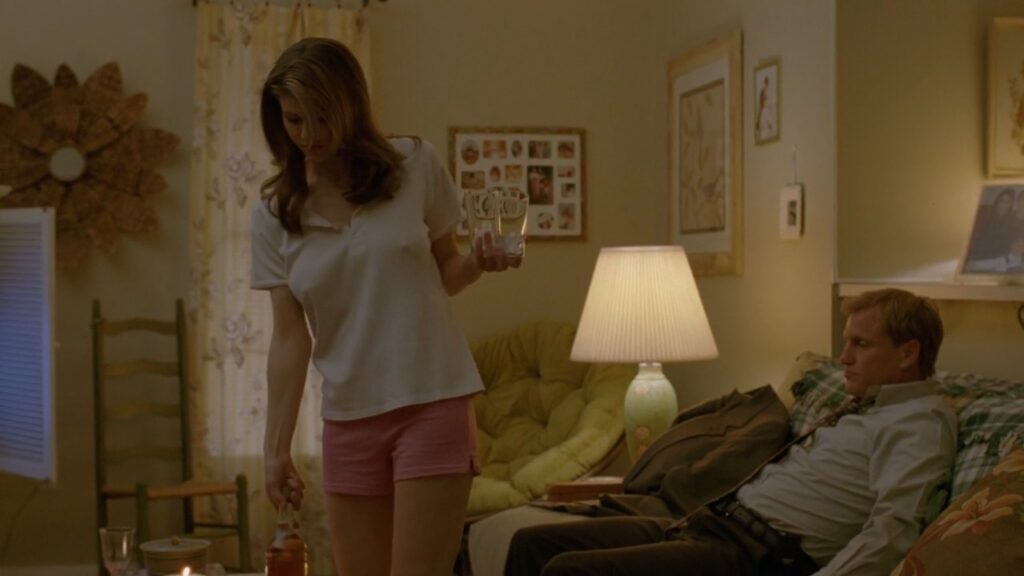
What the camera does next is unhurried and unobstructed. It doesn’t cut away, doesn’t shadow, doesn’t crop. And what it reveals stopped people cold.
Daddario at 27 had the kind of body that makes the word “curves” actually mean something. Full, heavy boobs that sat beautifully, a waist that pulled in so sharply it made everything above and below it look even more generous. Hips that flared out wide into thighs that were soft and full without being heavy. Her nipples visible, her ass on display when she moved, the whole gorgeous package assembled on a frame that was otherwise long and lean.
The boobs were what hit people first and hardest. That was the feature generating frantic screenshot activity by that evening, the thing people were texting friends about the next morning. But the scene never reduced to a single body part, because her face was in frame the whole time. Those blue eyes. That bone structure. Looking directly back at the viewer. She wasn’t an anonymous body being revealed. She was present, watching you watch her, and that combination of those curves fully exposed and that face at full intensity was genuinely overwhelming.
She was 27. It was her first time nude on camera. And she was devastating.
The scene ran. The episode ended. And then the internet caught fire.
The Morning After
Daddario has described what happened next with a specificity that makes the story vivid and real. “Getting naked on a show where I didn’t have a huge role, I didn’t know what to expect,” she told Collider in 2021.
She found out very quickly.
“And then of course that episode aired,” she recounted, “and my manager calls me in the morning after the episode aired and she was like, ‘The phone’s been ringing off the hook all morning. The phone won’t stop ringing!’ And all of a sudden, everyone in town wanted to meet with me.”
The result was almost immediate and entirely concrete: she booked San Andreas, the 2015 Dwayne Johnson disaster film, which gave her leading-lady status in a major Hollywood production. One scene, one episode, one morning of ringing phones and the trajectory of her career bent sharply upward.
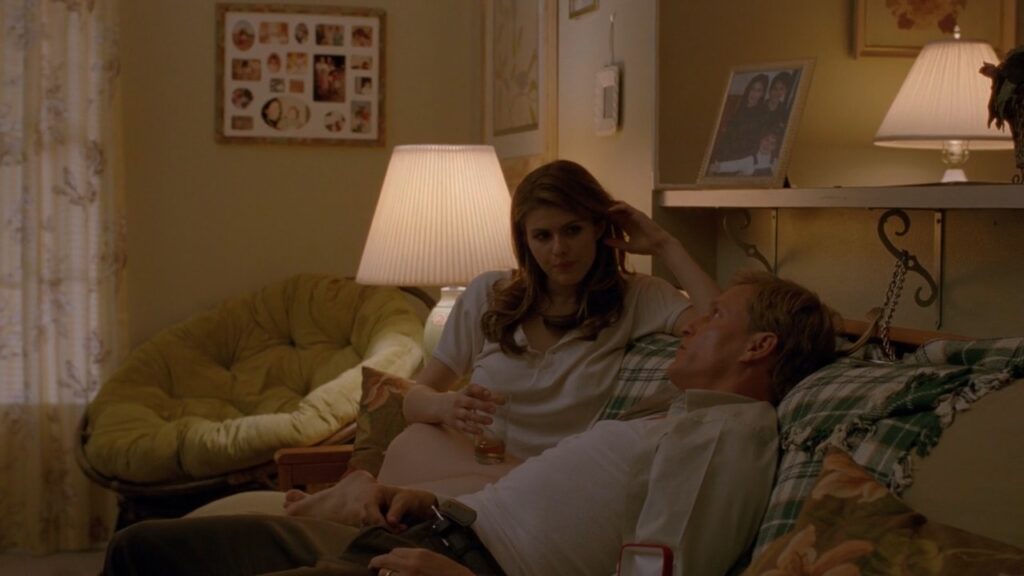
She had not anticipated any of it. “It was tactical,” she said of her decision to take the True Detective role, “but not that tactical.” She had wanted the part because she thought it would demonstrate her range and look good on her resume. She had not been invited to the show’s premiere, an oversight she interpreted as confirmation her role was too minor to matter. She was wrong about that in the most dramatic way possible.
And then came the confession that reframes everything: “I think that I hadn’t been that aware of my sex appeal prior to that,” she told Men’s Journal in 2022. “I tried not to take it too seriously. I really love acting, in my heart I’m just a theater nerd.”
Why the Reaction Was So Large
The size of the response was not random, and it was not simply a function of a beautiful woman taking her clothes off. Several forces converged at once to produce an explosion of attention that nobody saw coming.
First, the context of the show itself. True Detective in January 2014 was already the most discussed television event of the moment. Critics were calling it a masterwork. Millions of people were watching with their full attention. When the scene arrived, it arrived in front of an audience that was already primed for intensity.
Second, the contrast with her established image. The audience that knew Daddario from Percy Jackson had filed her under wholesome and family-friendly. The scene in True Detective demolished that categorization in about thirty seconds. The psychological jolt of a figure the audience had placed in one box suddenly appearing in a radically different one amplifies the impact enormously.
Third, the specific quality of her physical appearance. Daddario is not beautiful in a generic, interchangeable Hollywood way. She has a combination of features that is genuinely unusual: that face, those eyes of a blue so vivid they read as slightly improbable, paired with a body built like a fever dream. The contrast of the dark hair, the ice-blue eyes, and those curves all working together is the kind of thing that makes people stop mid-sentence. When that face and that body were placed in an explicitly sexual context for the first time, the cumulative effect was seismic.
Fourth, social media amplification. In January 2014, Twitter and Reddit were in their prime as cultural accelerants. A scene that might once have circulated slowly through word of mouth instead ricocheted across the internet within hours. Screenshots, reactions, and think-pieces fed a self-reinforcing cycle of attention that had already taken on a life of its own before most people had even watched the episode.
Fifth, the sheer unexpectedness of it. Nobody was prepared. Not the audience. Not Hollywood. Not Alexandra Daddario herself.
The Woman Behind the Image
What makes Daddario’s story genuinely interesting rather than merely titillating is the sincerity of her disorientation. Her accounts across years of interviews are remarkably consistent, which is a reasonable test of authenticity. She was not performing ignorance of her appeal. She had genuinely internalized an identity as a serious actress, a theater kid, someone who engaged with the craft of performance and not with the machinery of physical presentation.
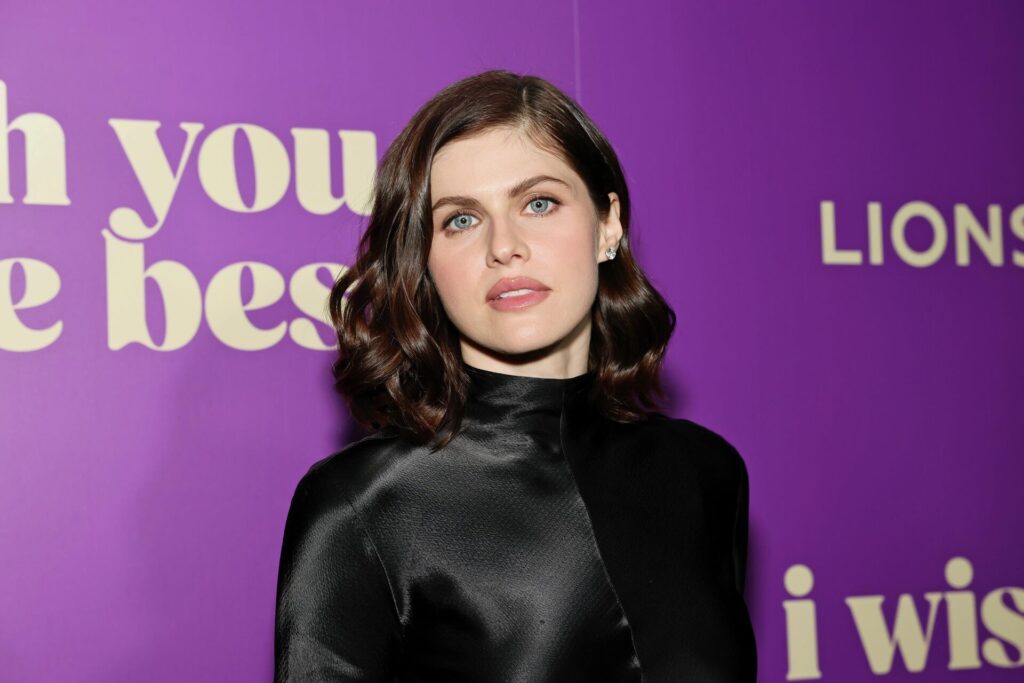
“I happened to have a lot of fun with getting dressed up and playing roles,” she has said, “and even on red carpets, I’m kind of playing a role.” This is not the language of someone who builds her identity around being looked at. It is the language of someone who thinks of even public appearance as a form of acting, something external to her actual self.
Her discomfort with catcalls, her habit of hiding her body rather than displaying it, her self-identification as a theater nerd rather than a sex symbol: these are not postures. They are the profile of someone who developed professionally in an environment where being taken seriously as a performer felt incompatible with leaning into physical appeal. Hollywood is full of beautiful women who have made exactly that calculation. Daddario made it instinctively, without fully understanding what she was sitting on.
The True Detective scene forced a reckoning. The world told her something about herself she had not known, in the loudest possible terms. She listened. “I sort of took that and said, ‘This is good for my career,’ and embraced it,” she said. Not with resentment, not with embarrassment, but with the pragmatic intelligence of someone who, once informed of a fact, incorporates it and moves forward.
The Afterward
The years since have shown an actress who found a sophisticated equilibrium between the two identities she inhabits. She delivered a quietly devastating performance in The White Lotus Season 1 as Rachel, a woman whose dawning awareness of her own commodification within her marriage echoes, in an eerie way, Daddario’s own awakening to how she was perceived. She has continued working in prestige television and mainstream film, and built one of the more substantial social media presences in Hollywood, all while maintaining the self-awareness that the pre-2014 version of herself notably lacked.
She has not pretended that the True Detective scene didn’t happen, or that its impact was purely about craft, or that she is above the economy of physical attention that operates in the entertainment industry. But she has also refused to let it define her entirely. The theater nerd is still in there.
The most honest version of her story is this: she was a genuinely talented actress with a body that could stop traffic and a face that could make you forget your own name, who had never fully put those two facts together. It took one scene, one night, one morning of ringing phones to force that reckoning.
She hadn’t known. And then she did. And nothing was the same afterward.