
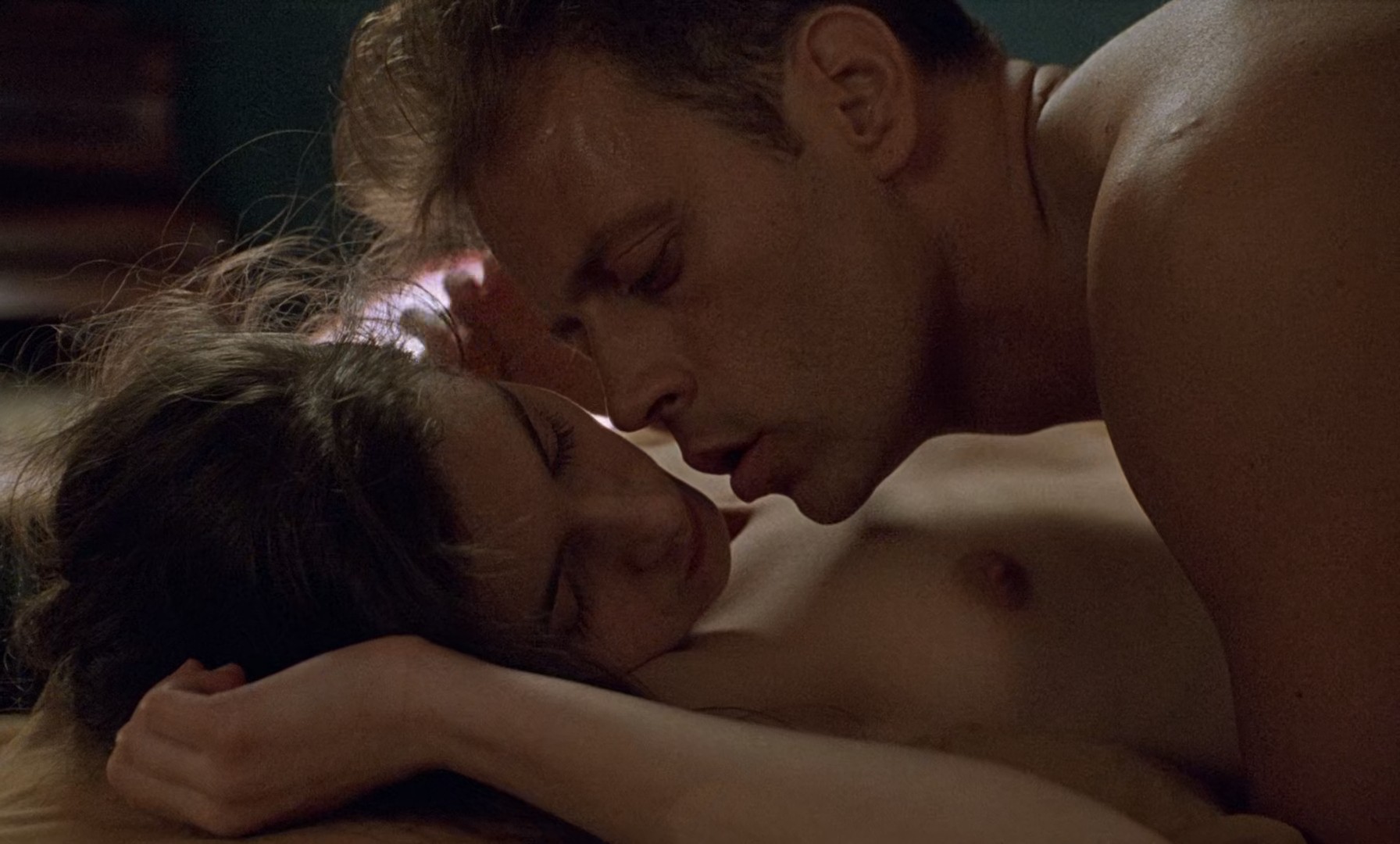
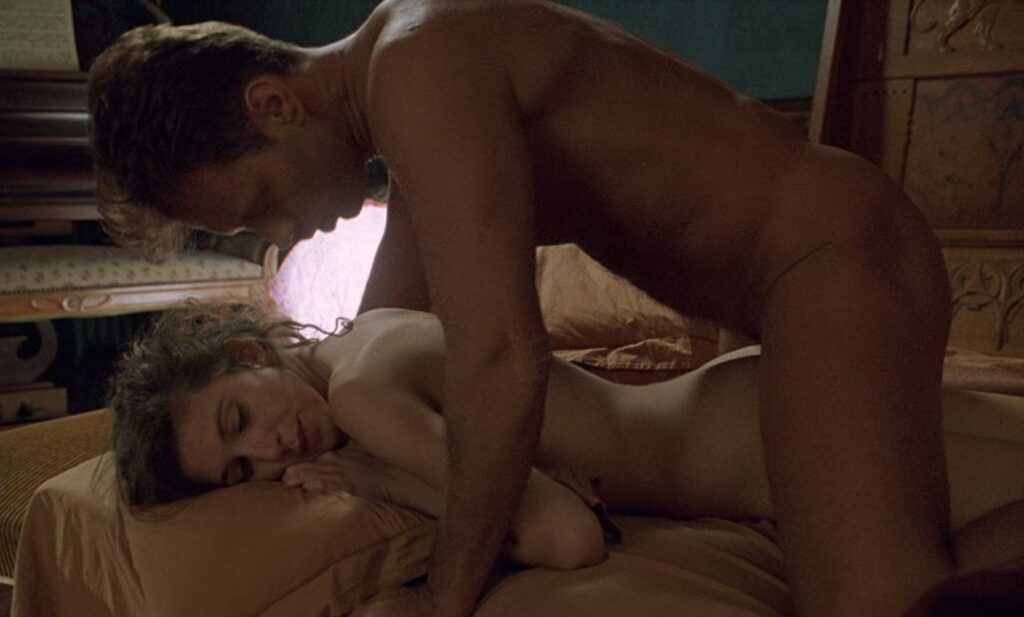
The conversation about Romance opens with a woman and a man having sex in a way that no mainstream European film had shown before in a scene that generated the most controversy is the one between Caroline Ducey’s Marie and Rocco Siffredi’s Paolo. Siffredi, at the time Europe’s most famous porn actor, known throughout the industry for an unusually large penis and a style that was distinctly not gentle, takes Ducey from behind. The camera does not look away. The question of whether what it captured was real or performed has never been conclusively answered, and everyone involved has a different version of events.
What Siffredi said
Siffredi has been the most explicit. In a radio interview he confirmed the sex was real. He described the day as fraught and difficult, recalled that Ducey was frightened and in tears, and that he had to leave the set to calm down. When he returned he could not get an erection. He recovered, he said, by fantasizing. Then, in his words: “she put a condom on me and I took her from behind.” He was unambiguous about what that meant. “Afterwards that scene caused a lot of problems. She kept phoning me in Italy saying I was mad to tell people that we had sex. I had to tell her that I know when I have had sex.”
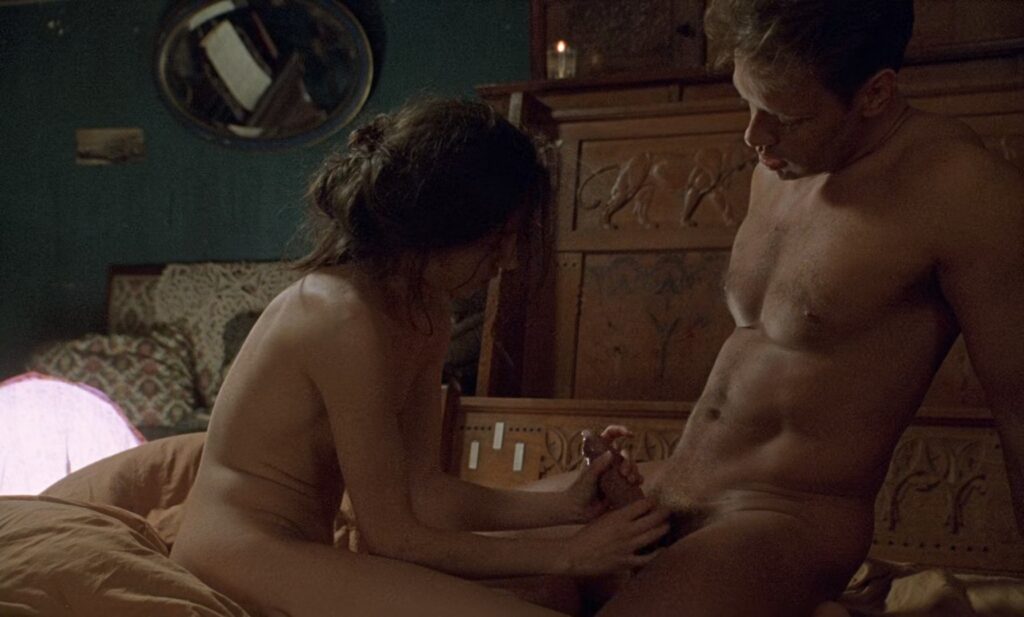
In the same radio interview, Siffredi added details that have circulated widely since. Ducey had never been with anyone of his size before and asked him to be gentle. He was. They filmed for approximately six hours, working through multiple positions, and very little of that footage made it into the final cut. Breillat’s instruction to Ducey throughout, according to Siffredi, was simple: just lie back and enjoy it.
What Breillat said
Breillat confirmed as much as she was willing to without fully committing. “Siffredi has said he did go all the way,” she said in an interview. “I was sure that he did, or 90 per cent sure anyway. But Caroline insisted that he didn’t.” In a separate interview she articulated her philosophy on the matter in terms that left little ambiguity about her intentions: “Actors do not simulate: they don’t simulate emotions, so at the same time they cannot simulate pleasure. They have to act it.”
Ducey had accepted the part of Marie knowing that going all the way was written into her contract. The deal, in Breillat’s words: “we’d go as far as we had to, as far as the film required.”
“She kept phoning me in Italy saying I was mad to tell people that we had sex. I had to tell her that I know when I have had sex.”
Rocco Siffredi
What Ducey said, and what she wrote in 2024
Ducey denied the sex was real, consistently and for years. She found the entire experience of the film deeply distressing and, by her own account, struggled to come to terms with it long after filming ended. Then in 2024, she published an autobiographical book titled La Prédation, which translates as The Predation, and the account she gave reframed the conversation entirely.
In the book Ducey recounts unsimulated sexual assault during the filming of the staircase scene, a separate sequence involving a stranger. She had raised concerns with Breillat about the explicit sodomy described in the script, and Breillat had reassured her it would not be filmed literally. On the day of shooting, Ducey found herself confronted with a different reality. The actor performing the scene performed an unsimulated act of cunnilingus on her without her consent or prior notice. She describes feeling paralyzed, and says she jolted back to awareness only when she heard the sound of tape running out.
Ducey’s contract contained an explicit clause stating the film would not be classified as pornography and that she would not participate in unsimulated sex scenes. The book’s account of what actually happened on set places the entire question of the Siffredi scene in a different light. The question was never simply whether they had sex. It was whether she knew what she was agreeing to, and whether the terms she had signed were honored.
What the film shows
Romance became notorious on the festival circuit because it is an intelligent, radical film by a woman that at the same time contains explicit nudity and, as nearly as critics could tell, actual sex. Roger Ebert, who reviewed it for the Chicago Sun-Times, noted that Siffredi was cast precisely because of his reputation and his physicality, and that the film placed him in a context that was nothing like pornography. “Marie relates to Paolo as if he is a laboratory specimen,” Ebert wrote. “So this is the famous white rat she has heard so much about.”
The scene itself, whatever its precise physical reality, is one of the most charged and unsettling in 1990s European cinema. Ducey’s face in the Siffredi scene, the quality of her response, the duration of the camera’s attention, all of it reads differently depending on what you believe happened. It is a scene that is, in the most precise sense, impossible to watch neutrally. The film is one of the most sexually explicit to make its way into the mainstream, but Breillat’s exploration of female sexuality is often deliberately unsexy. The sex is not presented as pleasure. It is presented as evidence.
What remains unresolved
Twenty-five years later the question has not been answered and probably cannot be. Siffredi says it was real. Ducey says it was not. Breillat says she was almost certain it was. The 2024 book shifts the moral weight of the debate without resolving the factual one. What it adds, definitively, is Ducey’s account of what it cost her — not just that scene but the entire filming, and the gap between what she was promised and what she experienced on set.
Romance remains on lists of the most explicitly sexual mainstream films ever made, alongside The Brown Bunny, 9 Songs, and Anatomy of Hell, Breillat’s own follow-up. It is studied in film schools, written about in academic journals, and argued over in forum threads that are still active decades after its release. The Siffredi scene is the center of all of it. A few minutes of footage that three people remember differently, filmed in a single day in Paris in 1999, that nobody has ever been able to definitively explain.