
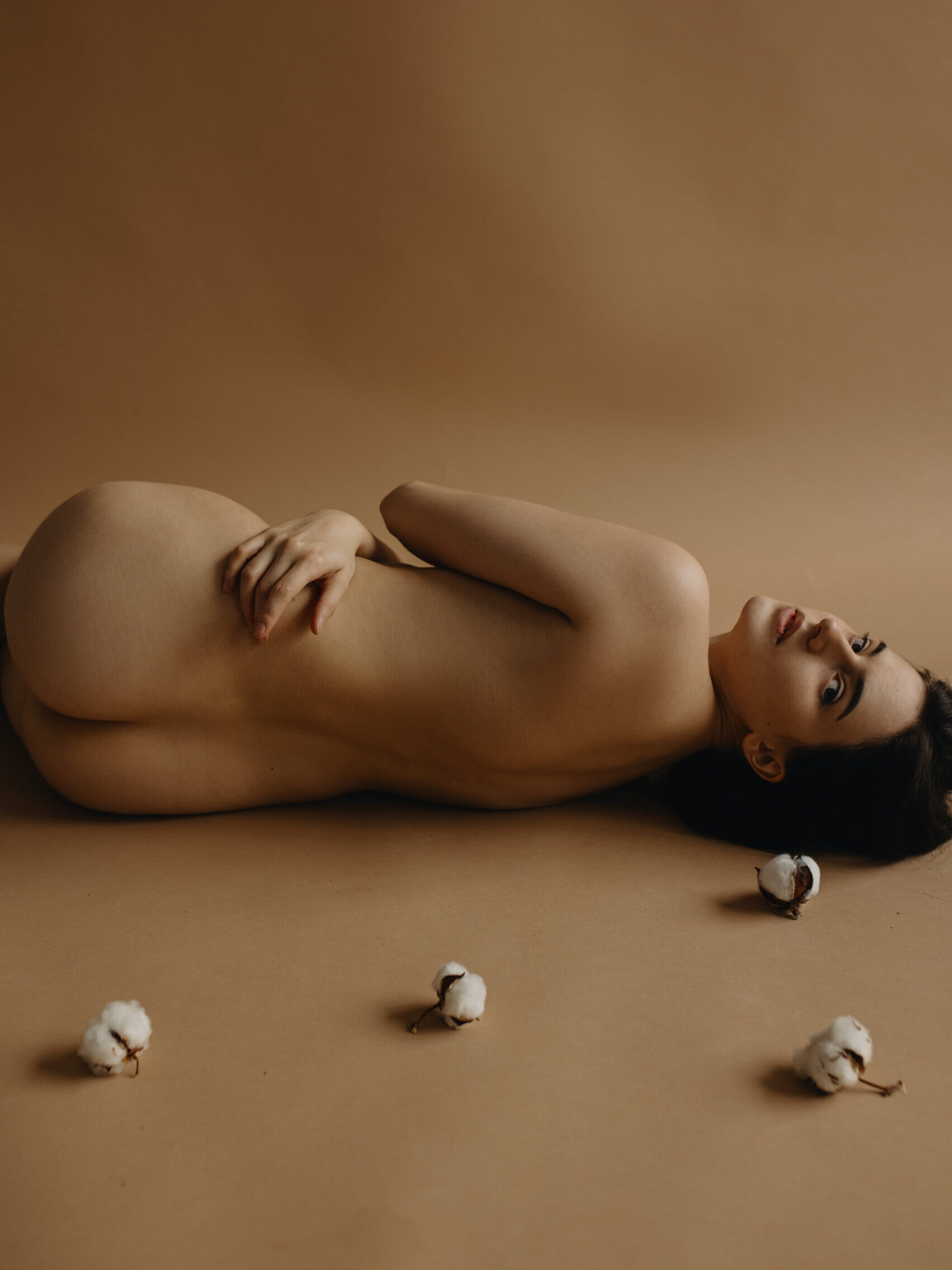
In a culture addicted to algorithmic perfection, one Ukrainian photographer is making the unfiltered human body a political act.
There is a particular kind of courage that doesn’t announce itself. It doesn’t arrive with a manifesto or a press release. It shows up at the edge of an Icelandic glacier at night, under a sky that refuses to go dark, with a Canon R5, a Sigma 35mm, and a human body stripped of every artifice the culture insists it needs. That is where Anastasia Mihaylova works. And what she produces there is some of the most politically loaded, formally rigorous, and genuinely beautiful nude photography being made anywhere in the world right now.
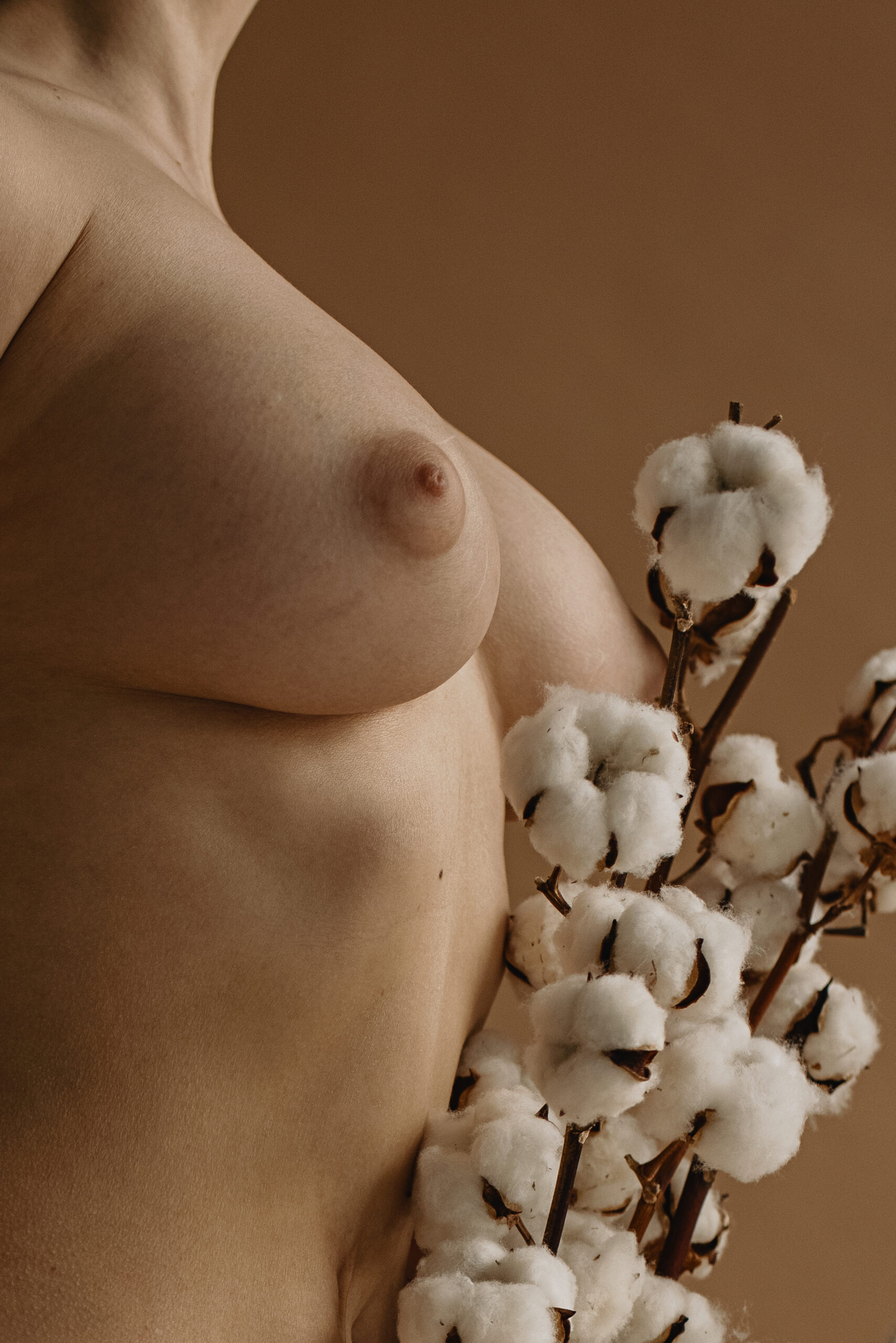
Anstasia Mihaylova, the Ukrainian-born photographer and model who has built a global following under the handle mihaylovaJPG, operates under a creative code so absolute it functions less like a style choice and more like a philosophical position. No makeup. No clothes. No manicure. No retouching. Only the pure essence of being, just a person and a camera, and nothing else. She calls everything else “tinsel,” and she means it as an insult. Foundation, manicures, the smoothing brush in Lightroom, the softbox in the corner of the studio: all tinsel. All noise between the lens and the truth of a body. Studio light is absolutely not for her, as she confirmed in conversation with fellow artist Thomas Berlin. She works with natural light, and when the intimacy demands it, a single ordinary table lamp.
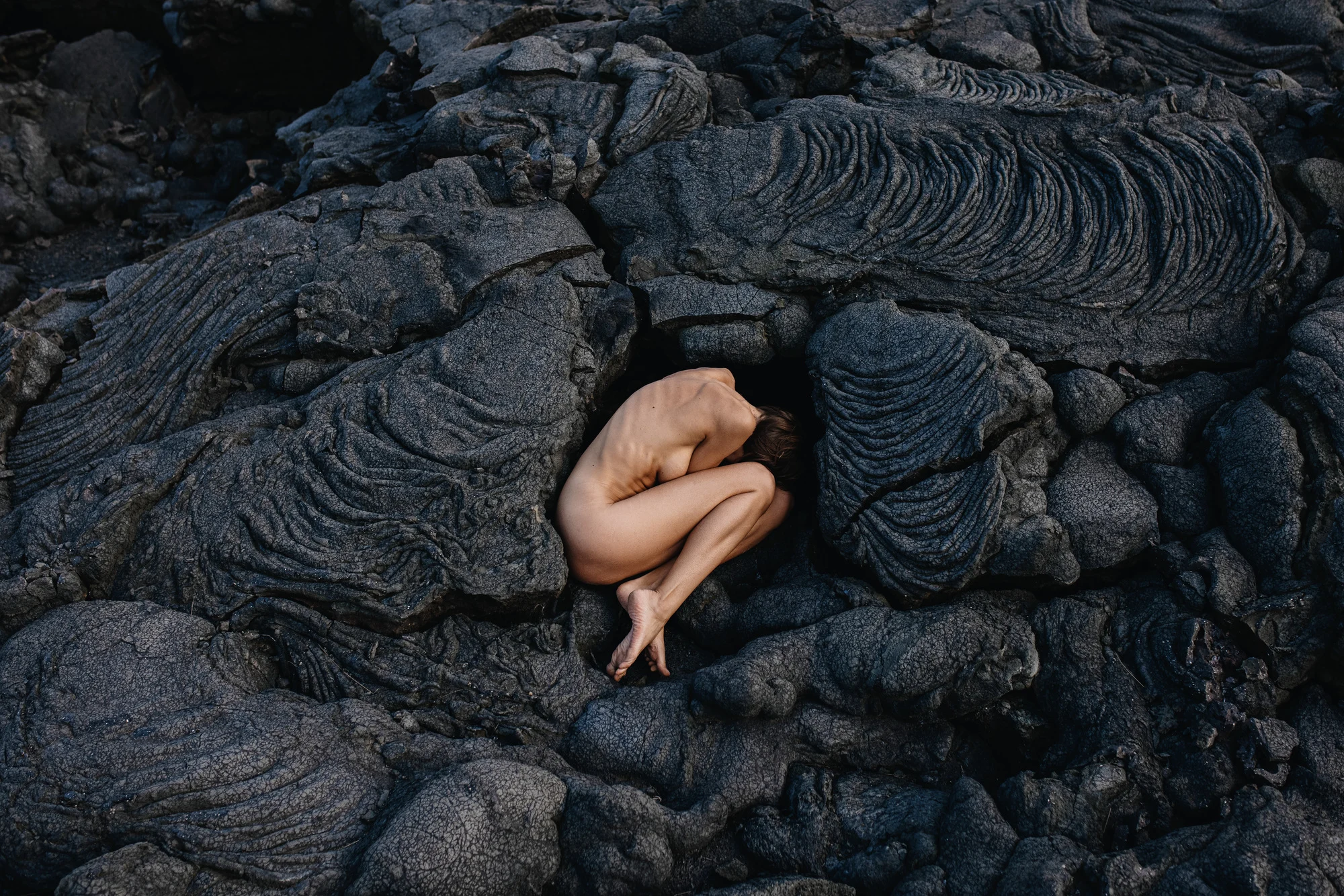
The images that result from this discipline do not look like what contemporary fine art nude photography usually looks like. There is no glossy magazine sheen, no precision-lit skin that reads more like CGI than flesh. What Anastasia gives you instead is the actual contour of a collarbone, the unmanaged shadow in the curve of a hip, the texture of real skin against volcanic rock or the blue-grey surface of a glacier. Bodies that sweat, that freckle, that crease at the belly when they bend. The nakedness in her frames is not the nakedness of performance. It is the nakedness of a person who has agreed to stop pretending, and a photographer who has agreed to look without flinching.
Fifteen Years to Find a Calling
Anastasia Mihaylova is an art nude photographer with over 15 years of experience across the full range of photographic genres, who found her true voice specifically in the nude. She picked up her first professional camera at fourteen. For twelve years she shot absolutely everything, from subject photography to weddings, birthdays, and reportage. She tried it all, but only in art nude did she truly find herself, found her calling.
The pivot, when it came, was total. She enrolled at the Academy of Photography in Warsaw, sat through the studio lighting classes, and walked out having concluded that studio light was absolutely not for her. The decision was not aesthetic preference. It was a conclusion about what photography is for.
Her definition of a good picture is one that conveys the author’s idea without description, without words, and evokes vivid emotions, the feeling that the photo is alive. A photo should touch. If it doesn’t, it is just an ordinary picture, like a million others just like it. By that standard, her own work consistently succeeds. The Iceland series, shot during the long summer nights when the sky stays overcast and everything turns a pale, glacial blue, has the quality of landscape photography and portrait photography collapsing into each other. The body is not placed in front of the environment. It belongs to it. A bare back against black lava. A figure lying on ice, skin taking on the cold color of the stone beneath it. The human form as geological event.
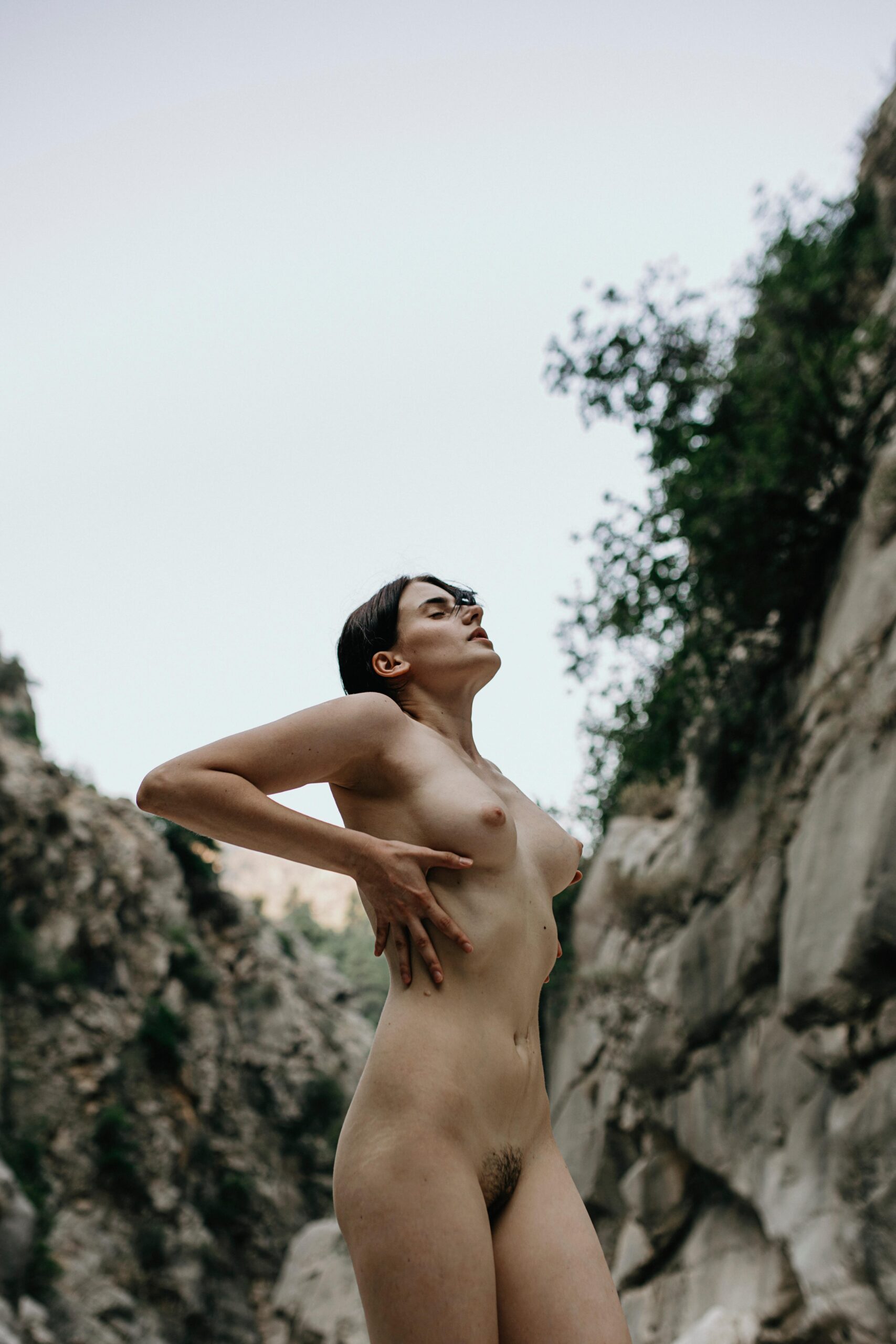
Her stated mission is to show people who they really are, so that people stop being afraid of their bodies and stop considering them something bad and something to be ashamed of. Her aim is to change the attitude of people toward the body, completely desexualizing it and showing that we are just a part of nature, its beautiful creation that needs to be loved.
That sentence reads as simple, even obvious, until you reckon with how violently the current cultural infrastructure resists it. Instagram has deleted her pages. Social platforms have flagged her work as obscene. The algorithm that cheerfully serves up heavily filtered, surgically altered, and commercially sexualized bodies in lingerie draws a hard line at a naked woman standing unretouched in a field, because the unretouched body, it turns out, is the more threatening image.
Mihaylova understood this early. She signed on to Don’t Delete Art, a collaborative initiative focused on protecting artistic expression across online platforms, founded in 2020 and backed by the National Coalition Against Censorship, PEN America’s Artists at Risk Connection, and Freemuse, and has been vocal about the absurdity of a web infrastructure that treats the Renaissance nude as sexual harassment. She has said plainly that social media platforms are harassing artists like her, that tomorrow your page on Instagram may be deleted again, but your work will continue to hang on the gallery wall. That is not resignation. That is strategy.
The Work Is Built on Real Ground, Literally
Mihaylova very rarely works with new models. She is already used to working with people she knows well, people who are ready to stand over a cliff or lie on a glacier for the sake of art. They do this not because she asked, but because their views and ideas completely coincide. Often they understand each other without words. That collaborative intimacy shows. The women in her photographs do not look like they are being photographed. They look like they are simply existing, and Mihaylova happened to be there with a camera.
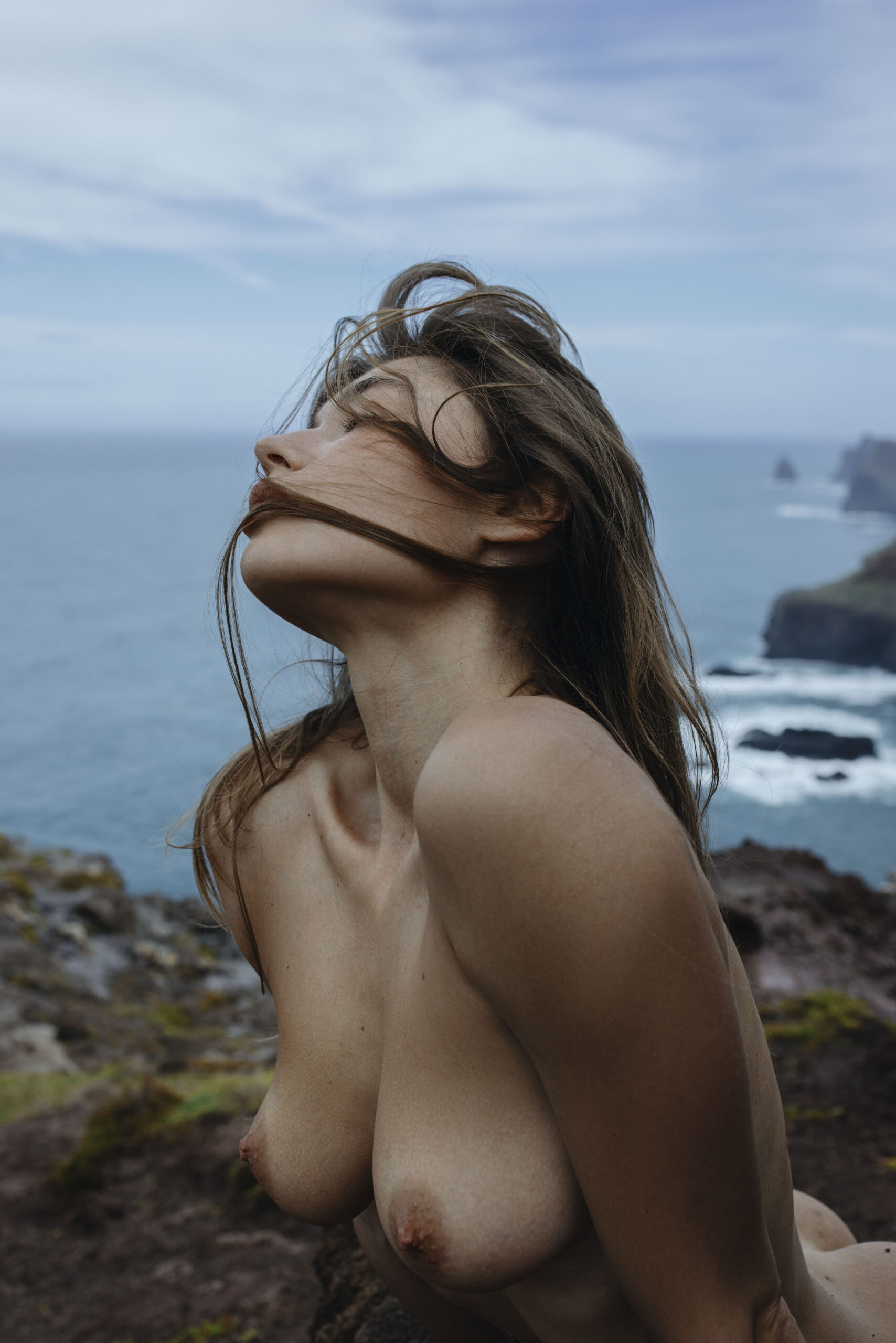
The technical setup is deliberately minimal. She shoots on a Canon R5 paired with a Sigma 35mm and no additional equipment, having concluded that you can shoot beautifully on anything, even a phone, and that the main thing is what you shoot. Post-processing is almost nonexistent. She does not retouch skin or bodies. Cropping is the primary edit. The philosophy and the method are the same thing.
Exile, Endurance, and the Body That Keeps Making Art
The personal biography behind this body of work adds a dimension that cannot be edited out. Born and raised in Ukraine, Mihaylova was forced to leave her homeland because of the war. She now lives and works in Warsaw, continuing to tell human stories through the universal language of light, form, and emotion. The displacement is not a footnote. For an artist whose entire practice is built on the idea that human beings are inseparable from the earth they come from, being torn from that earth by violence is not an abstract loss. It is a rupture in the very premise of the work. That she has continued to make it anyway, at the same level of conviction and physical ambition, trekking into raw landscapes with heavy gear and her own body as subject, says something about the stubbornness of a vision tested against real conditions.
When the war began, she did not retreat into the studio. She and her husband began volunteering, helping elderly people, people living with disabilities, and animals, later focusing more on animals and shelters. The person making these images of serene, naked bodies in untouched landscapes was simultaneously doing that. The contrast is not incidental. It is the whole argument about what the body means and what it is for.
The Record Speaks
The institutional validation has come steadily and from serious quarters. Her works have been exhibited internationally and published in Vogue Germany, Playboy, Fine Art Photo Magazine, and others. The exhibition record runs from ImageNation Paris to Holy Art Gallery London to M.A.D.S. Art Gallery Milan to Bali, and included a billboard on Times Square during New York Art Week, coinciding with The Armory Show, in September 2022. The Armory Show, for context, is one of New York’s most significant international art fairs, and having work displayed in Times Square during its run is not a footnote placement. As recently as early 2026, her work appeared across more than 3,000 screens throughout the Netherlands through ArtCrush Gallery in partnership with GlobalNL, and the current year’s calendar already includes ImageNation Paris in November.
None of that institutional recognition has softened the edge of what she makes. The work does not court approval. It proceeds from a conviction so settled that the validation is almost beside the point.
The Argument the Body Makes
What Mihaylova is doing, when you pull back far enough to see the whole shape of it, is mounting a formal argument against the entire visual economy of the filtered, monetized, algorithmically optimized body.
Every unretouched pore is a counterargument. Every shadow left in a fold of skin is evidence. The nude without tinsel is not nostalgic, and it is not naive. It is a position held under pressure, by a person who has lost a country, who carries ongoing physical difficulty into grueling landscape shoots, and who keeps picking up the camera anyway. The resulting images are not beautiful despite all of that. They are beautiful because of the seriousness with which she refuses to make anything easier than it actually is.
“I believe that only through the nude is it possible to show who we are, and we are, first of all, children of nature.”
Anastasia Mihaylova
That sentence is the whole argument. Everything else she does is proof.