
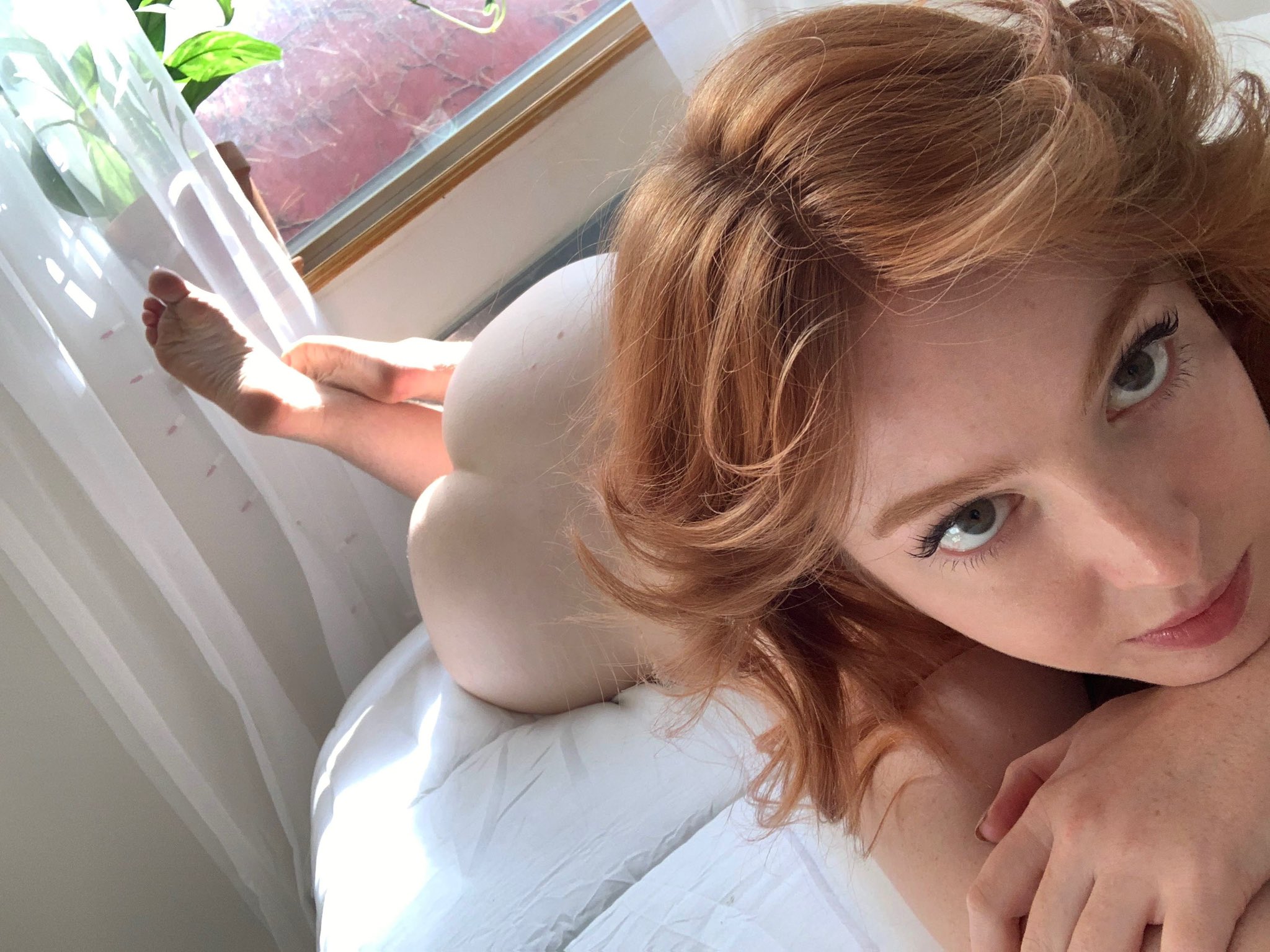
Meta’s automated systems are not designed to punish creators. They are designed to process them, to run content through a set of pattern-recognition rules written by committees and enforced by machines, and to remove anything that trips the filters without asking whether the removal makes sense. For most creators caught in that machinery, the result is a warning, a temporary restriction, a quiet throttling of reach that is unpleasant but survivable. For Erin O’Hara, the result was repeated, total deletion. Accounts wiped. Follower counts reset to zero. Years of growth erased without meaningful warning or genuine right of appeal.
She described the experience in Issue 24 of the Estimated Time of Arrival newsletter, published January 17, 2024, alongside a companion podcast episode hosted by Paula Romeu-Garcia. The reason given for her bans: sexual solicitation or nudity. Always, she noted, while other accounts posting the same images of her body faced no consequences at all. Her own reading of why:
“The male photographer is an artist, but the model that he shoots is a whore. That’s not what I think, but it’s how it’s still viewed.”
Erin O’Hara, Estimated Time of Arrival, January 2024
This could be the most precise summary of the double standard that governs how platforms treat the female body when it belongs to the woman presenting it rather than the institution framing it.
What the Platform Kept Deleting
Erin O’Hara is a model, erotic artist, photographer and pornstar originally from Canal Fulton, Ohio, now based in New York City. She is a natural redhead, a fact her audience will tell you is central to her visual identity, and she has been building her work in the space where fine art photography meets direct, unapologetic erotic content since at least 2018, when she joined OnlyFans. Her entry into nude modeling came through Playboy Plus in July 2019, where she was brought to the publication’s attention by photographer Cassandra Keyes. She also works as a denim designer, a detail that the press cycle around her platform bans consistently ignored in favor of the more sensational angles, and that she herself has described as constituting a kind of double life: the woman on the subway to her office job and the woman whose bare body was being systematically deleted from the internet are the same person.
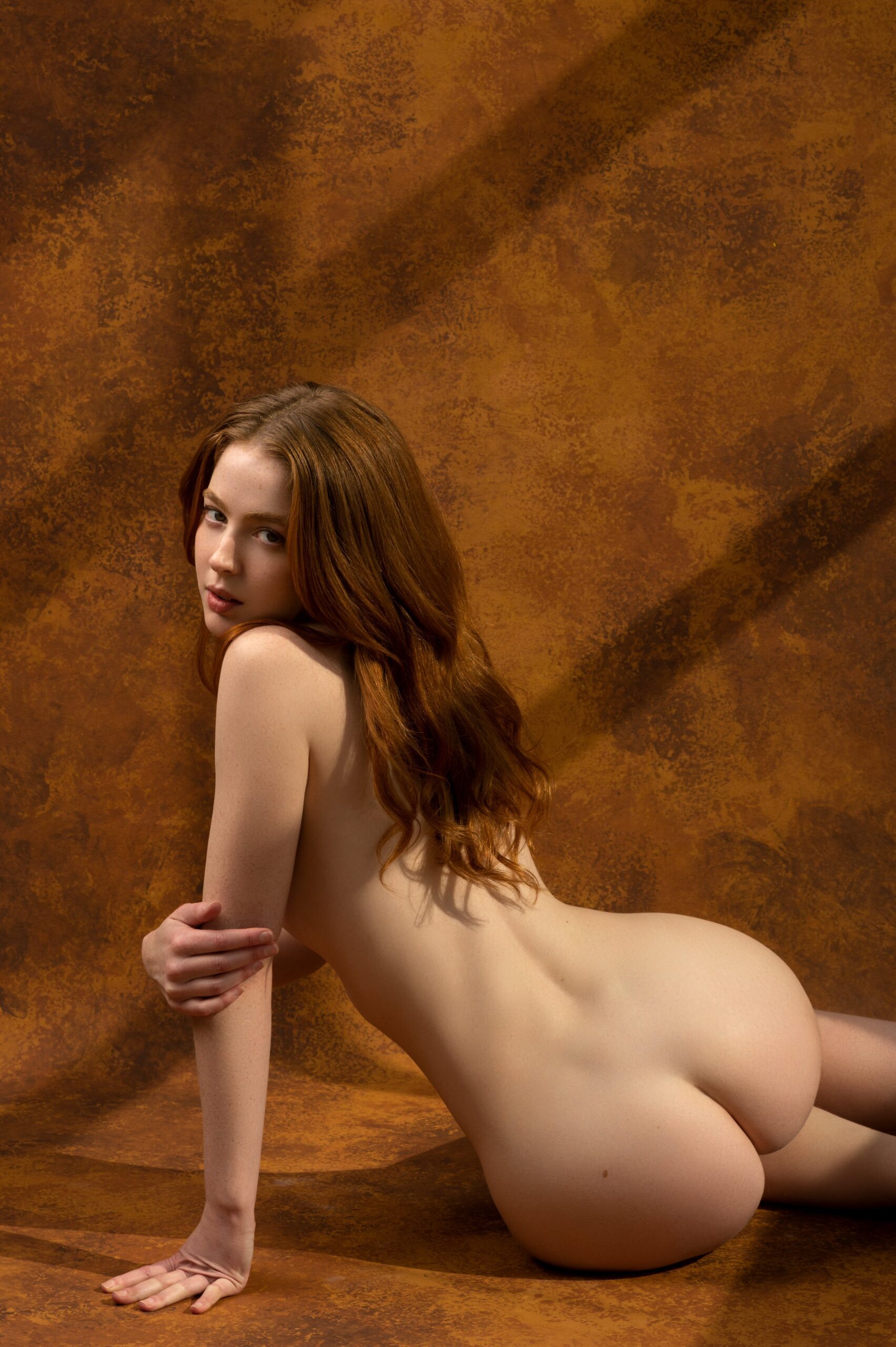
O’Hara has described this herself: “Most people wouldn’t know at first glance that I model nude. I love having that little secret while I ride the subway to my office job every day. I have a double life.” That double life is not a contradiction she experiences as tension. It is a deliberate choice about compartmentalization, and it is also, given what the platforms have repeatedly done to her public-facing work, a form of protection.
Her work is not hidden or ambiguous about what it is. It is striking, deliberately composed, and built around a specific visual language: the red hair, the direct eye contact, the unapologetic physicality that does not invite the viewer so much as it dares them to look away. She operates across OnlyFans, Patreon, and social media, with the OnlyFans carrying the explicit content and the Patreon functioning as a fine art photography portfolio including nudes, lingerie work and her writing. The Instagram and Facebook presence, the accounts that Meta’s systems kept finding and deleting, were the public-facing layer: the work that existed above the paywall, the part of her creative identity that was supposed to be visible to a general audience without a subscription.
A single account deletion is, for most independent creators, a career-ending event. The follower count is gone. The search history is gone. The algorithmic momentum, the result of years of consistent posting and audience engagement, is gone. Starting again means starting from zero in a digital landscape where zero is functionally invisible. The platform knows this. The deletion is not a neutral administrative action. It is an existential threat to a creator’s livelihood, delivered without due process and enforced by a system that has no mechanism for understanding what it is actually removing.
For Erin it happened not once but repeatedly. Each time, the same machinery wiped the same work, reset the same numbers, and sent the same automated response citing the same policies. Each time, the same community refused to accept the outcome.
The Specific Mechanics of the Double Standard
The detail that makes O’Hara’s case more than a story about platform inconsistency is the one she names directly in the newsletter. It is not simply that Meta deleted her images. It is that the same images, posted by the male photographers who shot them, remained online without consequence. She did not lose access to pictures of herself because the pictures were too explicit. She lost access because she was the woman in them rather than the man behind the camera.
This is the category error that O’Hara’s case makes visible at the operational level. Meta’s content moderation systems are, in theory, content-neutral: an image either violates the policy or it does not, regardless of who posts it. In practice, the system appears to flag accounts rather than images, and the accounts it flags are disproportionately those belonging to the women whose bodies are depicted rather than the photographers, publications or institutions that distribute those images as art or commerce. The male photographer’s account reads, to the algorithm’s pattern recognition, as a professional creative. The model’s account reads as a vector for the content the platform wants to suppress. Same image. Different account. Different outcome.
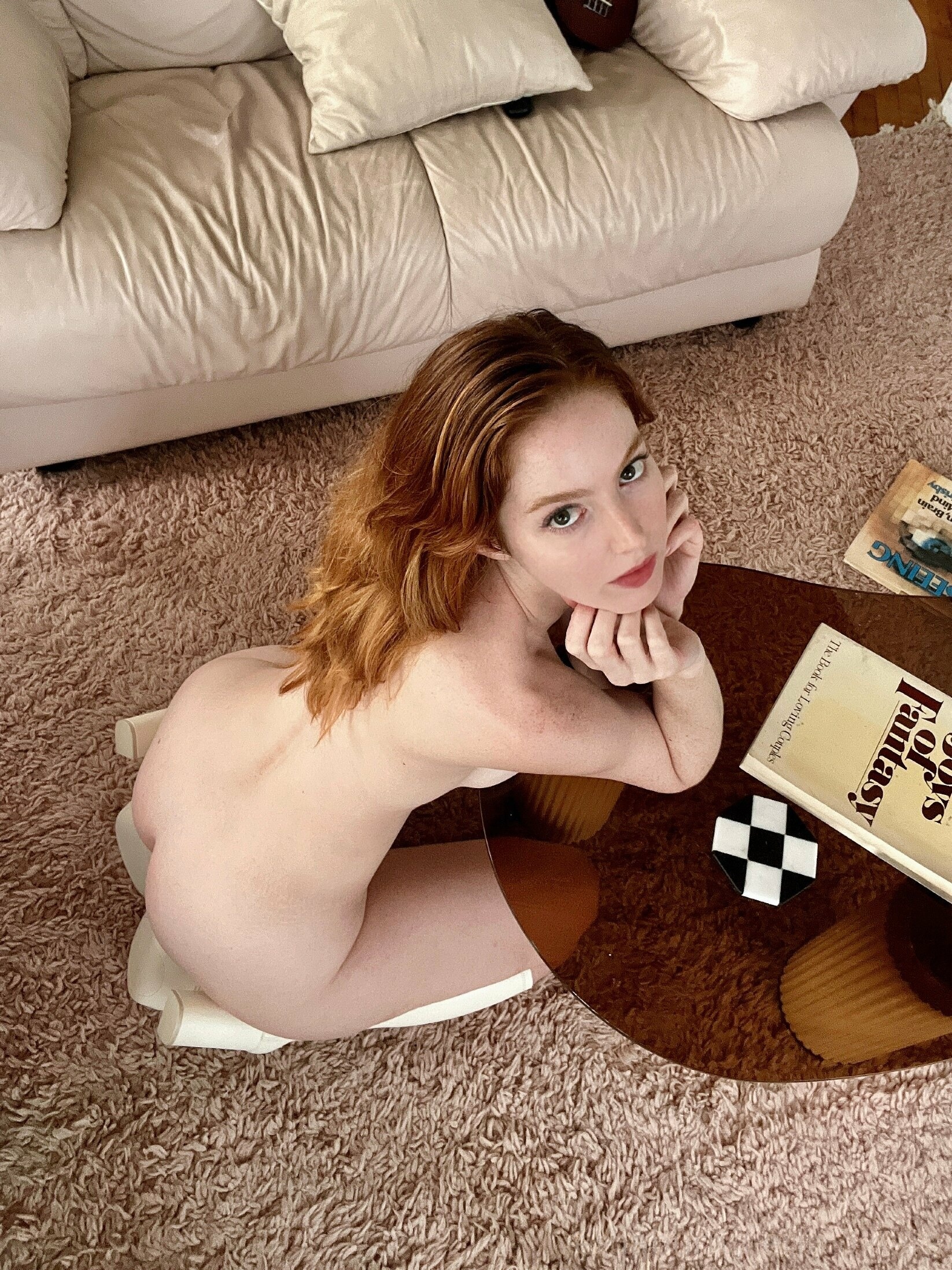
Erin puts it plainly: “I can’t post a photo of myself that another male photographer can post of me. I’ll get deleted, they won’t.” That asymmetry is not a bug in the moderation system. It is a structural reflection of the assumptions baked into who the platform imagines as a legitimate content creator and who it imagines as a problem to be managed.
How She Rebuilt. Every Time.
O’Hara describes herself as a top 0.5% creator on OnlyFans, which places her among a small fraction of the platform’s creator base by revenue and engagement. She has been on the platform since 2018, longer than most of her peers and, as she noted in the Estimated Time of Arrival interview, at least a decade older than many of the creators she shares the space with. That longevity and that seniority did not insulate her from Meta’s moderation machinery. What it did give her was a community that had been finding and following her work across multiple platforms for years, a community that had developed enough attachment to her specific creative identity that they were willing to do the manual work of locating her each time an account disappeared.
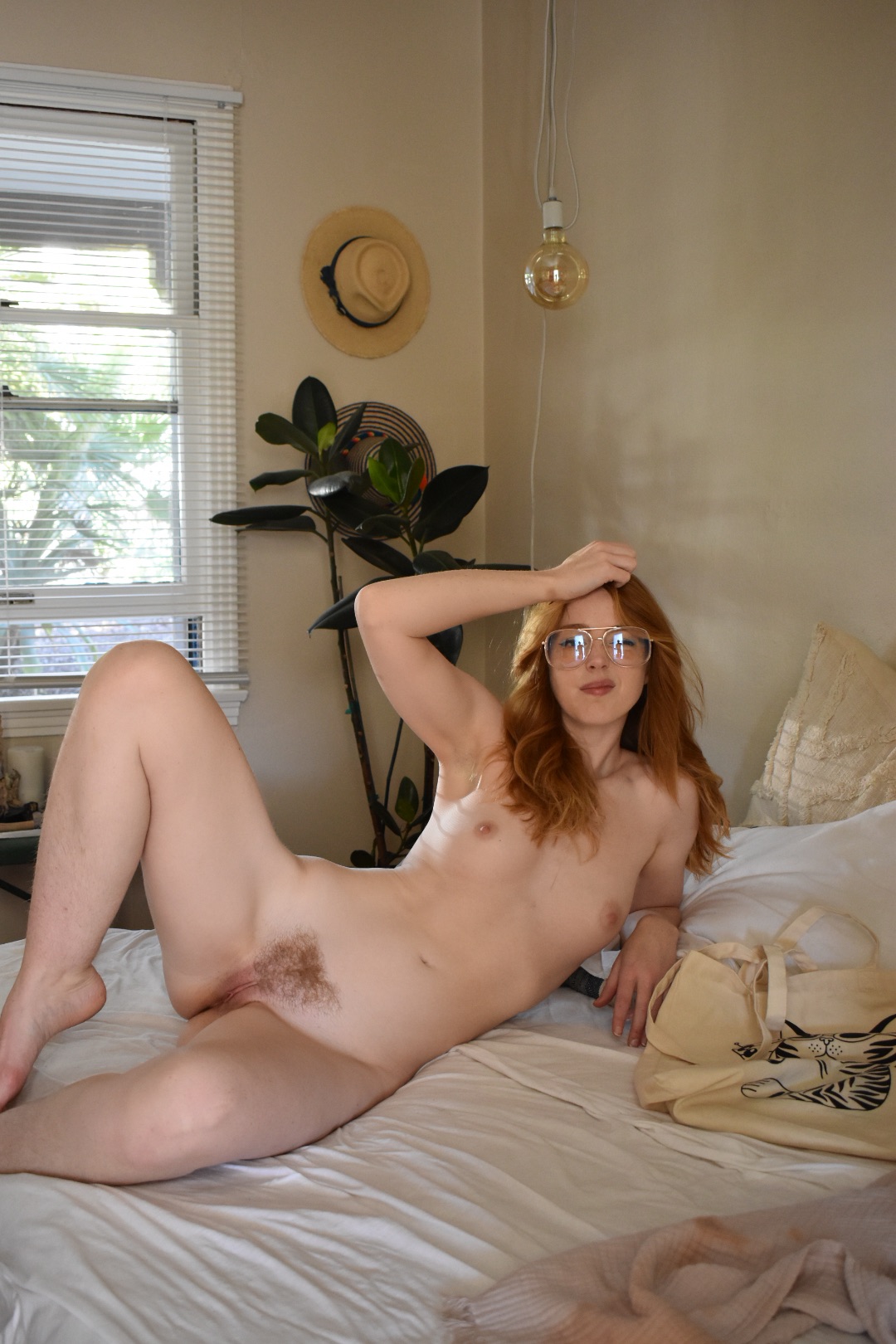
When an account was deleted, her followers did not shrug and move on to the next recommendation. They searched manually. They tracked down the new handle. They reshared her content to their own networks, functioning as a human distribution system in the absence of an algorithmic one. No discovery grid, no search suggestions, no recommendation engine pointing new eyes toward her work. Just people who knew what they had found and were not willing to lose it to a content policy that could not tell the difference between erotic art and violation.
This kind of loyalty is not manufactured by posting consistency or hashtag optimization. It is produced by work that is genuinely irreplaceable, by a creator whose visual identity is specific enough and whose presence is compelling enough that her audience experiences her absence as a particular loss rather than a generic gap in their feed. There is no algorithm that recommends a substitute for a specific person. Her followers knew this. They acted on it, repeatedly, across multiple deletions, and they brought her back each time.
What Her Story Proves
Erin O’Hara’s experience with Meta’s automated systems is not unusual among independent female creators working in erotic and fine art photography. The platforms that have become the primary infrastructure of the creator economy apply their content policies with a consistency that looks like neutrality and functions like targeted suppression. A woman presenting her own body, on her own terms, in work she has conceived and produced and owns completely, is processed by these systems in the same category as content that causes genuine harm. The category error is not accidental. It reflects assumptions about female bodies and female agency that are baked into the policy architecture and enforced at scale by machines that cannot interrogate their own premises.
O’Hara’s response to all of it, across the newsletter, the podcast, and her own public statements, is notable for its absence of self-pity and its precision of analysis. She is not angry in a diffuse way. She is specific: here is the mechanism, here is how it operates, here is what it reveals about who the platform thinks deserves to control images of a woman’s body. “Shame is a powerful tool,” she told Romeu-Garcia, “and if you don’t feel ashamed they have nothing against you.” That is not defiance for its own sake. It is a working theory of how platform suppression actually functions, and how to survive it.
Her community proved the theory correct. You can delete the account. You cannot delete the reason people followed it. Her work is the reason. They found it again, every time, one manual search and one reshare at a time.
Congratulations, Erin O’Hara. The platform never deserved this level of resilience. Your followers always did.