
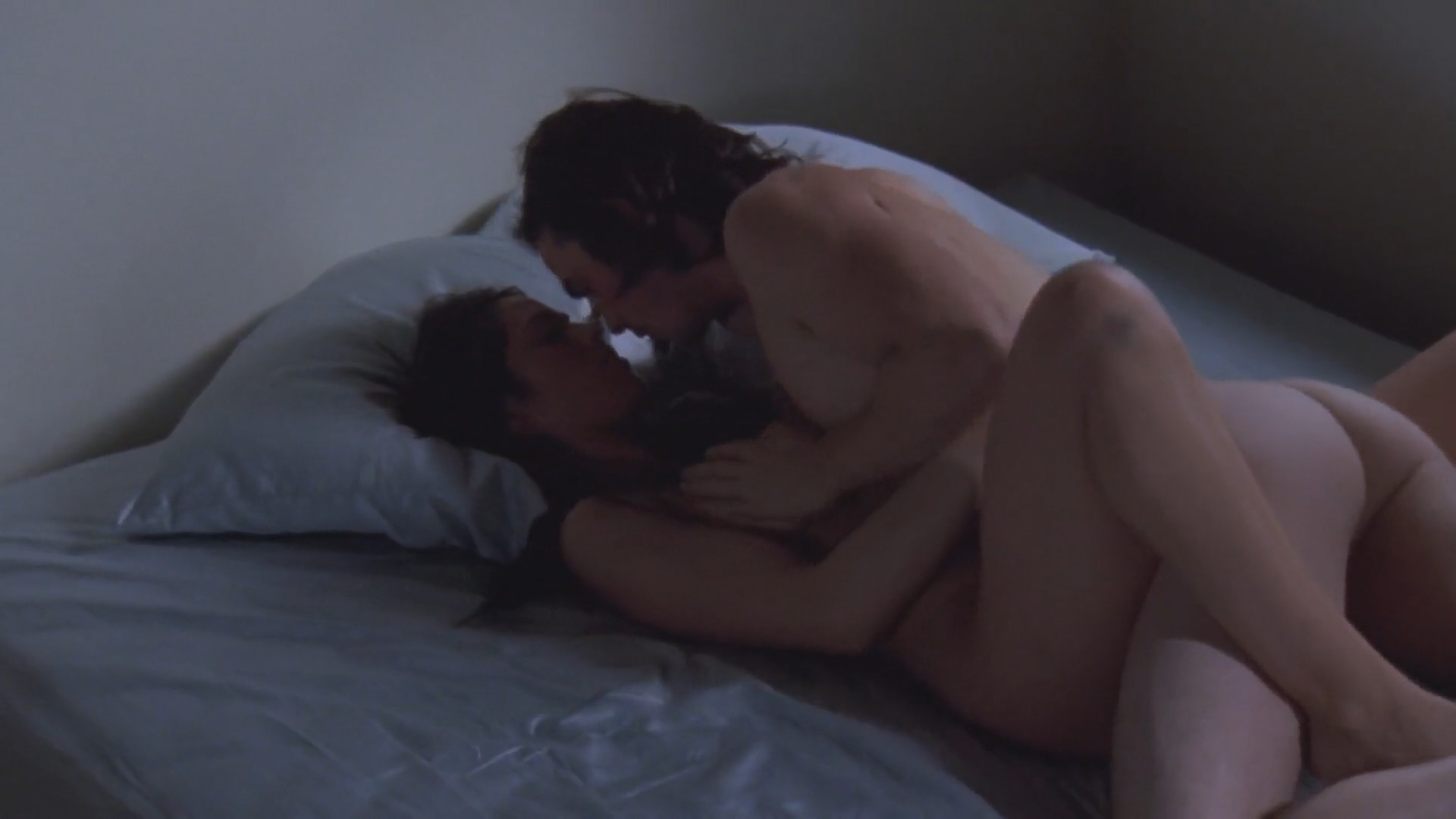
Most television sex scenes are polite lies. The industry runs on a well-rehearsed script of modesty patches, strategic leg placements, and actors performing vulnerability under climate-controlled lighting. It is exposure as illusion, designed not to reveal anything real but to keep the audience comfortable enough to keep watching. The camera cuts to a lamp. The sheet falls at an aesthetically convenient angle. The bodies never actually touch in any way that would require anyone to have a real conversation afterward. Then, in September 2007, Michelle Borth walked onto an HBO set and threw the whole playbook into the trash.
The Blueprint: What Cynthia Mort Actually Built
Tell Me You Love Me was created by Cynthia Mort and originally conceived under the working title Sexlife. That original title matters. It tells you exactly what Mort was going for before the network presumably nudged her toward something more palatable for a Sunday night drama listing. The show she actually made tracks three couples at different life stages, all in therapy with Dr. May Foster, all using sex, or the painful absence of it, as the primary diagnostic tool for what’s broken between them. Twenty-somethings Jamie and Hugo, played by Borth and Luke Kirby, experience the intensity of physical connection but slowly discover that sex has become a drug-like escape from the harder questions about fidelity and commitment they are not ready to face.
Mort wanted a naturalistic feeling throughout, so the show was shot with handheld cameras and features little to no music. This was not an aesthetic choice made in post-production. It was a structural commitment baked into every production decision, the refusal of the usual softening mechanisms that television uses to make intimacy watchable rather than real. No swooping score to signal when to feel tender. No steady, flattering cinematography to aestheticize skin into something safe. Except for the end of each episode, there is no non-diegetic music at all, a stylistic choice noted in structural breakdowns by CBR. What fills the silence instead is breath, friction, and the ambient sound of two people actually occupying the same physical space. For a viewing public trained to receive television intimacy as a choreographed performance, it was genuinely disorienting.
The Physical Commitment
Borth’s scenes as Jamie are the ones that detonated the conversation, and they deserved to. The camera stays on her in ways that American prestige television simply does not do. Her bare body, her boobs, the full curve of her ass, the unguarded reality of skin moving against skin: the show records all of it without the reflexive flinch that usually sends the director reaching for a cutaway. Very graphic sex scenes featuring full nudity are visible throughout, and Borth’s scenes in particular are among the most explicit the show contains.
What makes this analytically interesting is not the nudity itself but what the nudity is being asked to do. In the standard television model, a sex scene is a reward, an aesthetic set piece. The bodies are lit like products. The actor’s physical exposure is carefully managed so that the audience receives the titillation without any of the discomfort that actual intimacy tends to produce. Mort and Borth refused that transaction entirely. The handheld camera doesn’t flatter. It follows. The result is that you are not watching a performance of desire so much as watching desire itself, with all its awkwardness and urgency and imperfect physical reality left completely intact.
The Unsimulated Trap
Here is where the story gets more interesting than the headlines ever made it. When the show aired, the sex scenes were so graphic: organs, angles, the full physical machinery of intimacy on screen: that media reports began circulating in publications like The New York Times suggesting the actors were actually having sex on camera. This is, in retrospect, one of the most revealing moments in the whole saga, not because the question had a scandalous answer, but because the question was asked at all.
As outlined in ScreenRant’s breakdown of the controversy, it tells you exactly how far outside the established visual language of television the show had traveled. Mainstream audiences had so completely internalized the conventions of simulated screen sex that when those conventions were stripped away, many viewers had no remaining framework to understand what they were seeing except to conclude it must be real.
Mort’s response to the question was characteristically blunt: “Because this question is ridiculous. I just think the question is so silly.” She refused to dignify it, arguing that answering in the negative still granted the question a legitimacy it didn’t deserve. Borth, for her part, was more direct: “I was really adamant about it because you go about a sex scene the same way you go about any other scene. Whether it’s a really dramatic scene or it’s a fighting scene, it’s the same exact way.”
Co-star Adam Scott, meanwhile, revealed that he wore a prosthetic penis for certain sequences after declining to film full-frontal nudity, a production detail preserved in Parade’s production archive. This detail, which received far less coverage than the unsimulated rumors, is in some ways the most telling fact in the entire production history. The scenes looked so real that national media ran stories about whether they were pornography. They were achieved, at least in part, with a prop. The craft involved in manufacturing that level of physical believability, and the willingness to fully commit to the illusion on Borth’s part especially, is a more interesting story than the scandal it got buried under.
Executive producer Gavin Polone’s response at the TCA press tour made the situation no cleaner: asked whether the sex was real or simulated, he said he was “not sure” and that he didn’t want to “get into it.” Whatever his actual reasoning, the practical effect was to let the ambiguity breathe, and the show collected headlines it probably would not have gotten otherwise.
What the Critics Saw (And What They Missed)
The critical response compiled across Metacritic’s industry tracking was split in a way that itself reveals something. Several reviewers found themselves genuinely invested in the characters and their outcomes, with Charlie McCollum noting that by the end of the first hour they cared deeply about what was happening to the couples and whether they would find any real joy, and whether the characters worked for them as people was always their bottom line for whether a series succeeded. That is exactly what Mort was going for. The show is far more concerned with what sex means in committed relationships than with the sex act itself, and a viewer who lost sight of that had probably not been paying attention to the whole show.
But the conversation that dominated, in 2007 and for years afterward, was the one about whether the actors were actually doing it. Adam Scott later admitted it was frustrating that the sex scenes were essentially all anyone could focus on. The show won an AFI Award. It received a second season pickup. It was ultimately canceled via an official executive announcement reported by Variety in July 2008 when Mort and HBO concluded they could not find a satisfying direction for the story to continue, but by then the critical conversation had never really caught up with what the show was actually doing.
Even specialized critical views, such as the analysis by Gillian Flynn inside Entertainment Weekly, highlighted that while it was an incisive drama, it was not an easy commitment. Other legacy reviewers like Tom Shales at The Washington Post praised it as more sophisticated than broadcast network offerings, while Robert Abele at LA Weekly called it an unrelenting, suspenseful examination of marriage, and Maureen Ryan for the Chicago Tribune tracked it as an occasionally riveting show. Yet the mass market dialogue remained stubbornly fixated on the physical mechanics.
The Historical Bracket
To understand what Tell Me You Love Me actually cost its cast, you need to place it inside the timeline of prestige television’s relationship with the body. HBO had been pushing at the limits of cable propriety since the mid-nineties, but its approach to nudity remained largely asymmetrical well into the 2000s: female bodies as backdrop and atmosphere, male bodies protected by the same conventions that govern network television. Tell Me You Love Me broke from that in both directions, but it was Borth who bore the full weight of the experiment publicly, whose name became the shorthand for the controversy, and whose performance got relitigated for years in forums far more interested in what she was showing than in what she was doing dramatically.
What she was doing dramatically was considerable. Jamie’s arc across the ten-episode season is a study in a specific kind of young woman’s emotional dislocation: using physical intensity as a substitute for the harder language of commitment, mistaking the rawness of sex for the rawness of honesty, and slowly discovering they are not the same thing. The body work Borth did in service of that arc was not incidental to the performance: it was the performance. Every scene in which she gave the camera unfettered access to her physical reality was a scene making an argument about how Jamie uses her body as a deflection and a defense.
Borth herself articulated the voyeuristic logic of the show in an interview: “It will pull you out of the moment and pull you out of the scene if you cut to a lamp during a sex scene. The show is very voyeuristic. You’re watching people go through all their troubles. You’re watching them in the bedroom. You’re watching them in the therapy room.” That unbroken gaze is the show’s entire method. Cutting away would not have been modesty. It would have been a lie about what the show was trying to say.
The Gap That Still Exists
Almost two decades later, the conversation Tell Me You Love Me was trying to start has still not really happened at scale in American television. The industry’s relationship with female nudity has evolved in some ways and calcified in others. The modesty patch is still standard. The strategic cutaway is still reflexive. Full-frontal male nudity remains a deliberate provocation when it appears rather than a neutral narrative choice. And the question of whether an actress who commits fully to physical exposure in service of a dramatic argument is making art or making herself available for consumption is still, culturally, unresolved.
Mort’s show answered it. The answer was in the handheld camera that didn’t look away, in the silence where the score would have told you what to feel, and in Borth’s refusal to give the audience any of the usual exit ramps. The discomfort the show produced was not a side effect. It was the point. If watching two people navigate desire and distance and the complicated politics of a body shared with someone you’re not sure you trust anymore made you want to look away: that was the show working exactly as designed.
Most television sex scenes are polite lies. Tell Me You Love Me told the truth, and nobody quite knew what to do with it.